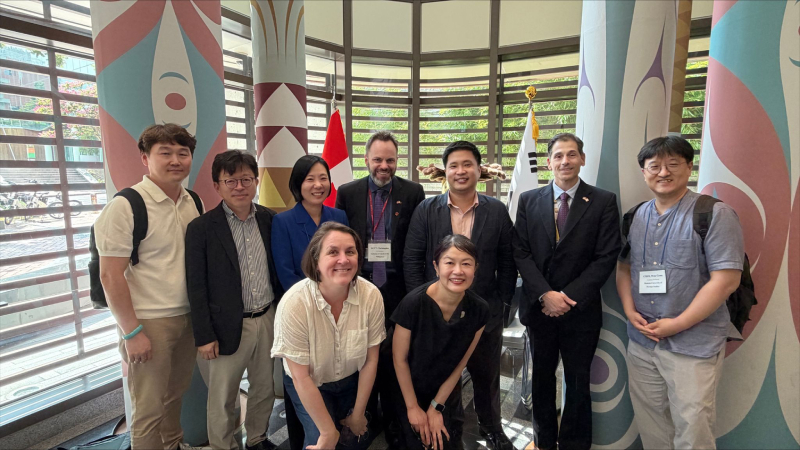
JICUF Supports Conference on Education Pathways for Refugees in the Republic of Korea
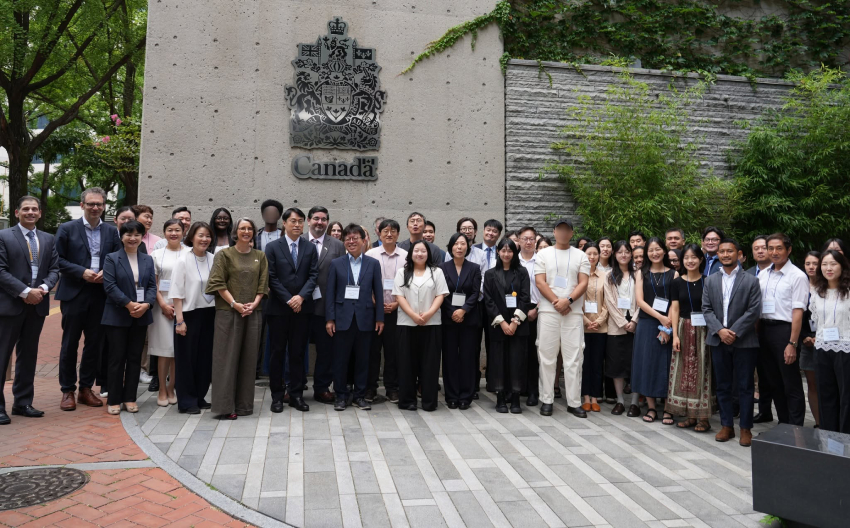
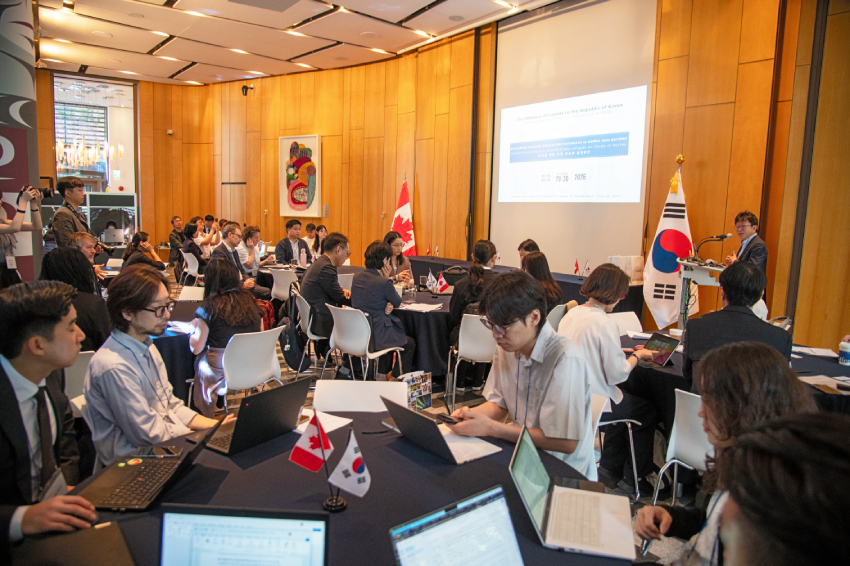
A conference titled “Exploring Education Pathways for Refugees in the Republic of Korea and Beyond” was held at the Embassy of Canada to Korea in Seoul on July 29-30. Education Pathways are programs that enable refugees to relocate to a safe third country through higher education opportunities while receiving protection. As a member of the Global Task Force on Third Country Education Pathways, JICUF contributed to its planning, which began a year earlier.
The idea of holding the first-ever conference on this topic in Korea emerged from a meeting in Chiang Mai, Thailand in June 2026. A multinational planning committee was subsequently formed, including key stakeholders from Korea such as the Ministry of Justice, Chungnam National University, and Kangwon National University. JICUF and its close partner, Pathways Japan, joined the committee, bringing a decade of experience supporting refugee higher education in Japan. The Embassy of Canada to Korea, the Korean Ministry of Justice, UNHCR Korea, and the Kangwon Institute for Unification Studies served as co-hosts, while other organizations contributed to the conference’s design and implementation.
The conference was timely, as the Korean Government launched an education pathways program for refugees through the Global Korea Scholarship (GKS) in January 2026. GKS is a long-running government scholarship program for international students. This year, the Korean Ministry of Education, Ministry of Justice and UNHCR signed an agreement to establish a scholarship exclusively for refugees within the GKS framework.
JICUF Vice President Aki Takada moderated Day 1, while Norimasa Orii, Representative Director of Pathways Japan, gave an overview of the evolution of education pathways in Japan. Practitioners and supporters from Canada, Australia and the Philippines also shared their experiences. On Day 2, participants broke out into small groups to discuss the essential considerations for developing education pathways, such as sustainable funding, university engagement, government policy and transition to employment. Each group concluded the conference by identifying three main action items.
Approximately 60 people attended the conference, the majority of whom were stakeholders in Korea, including government officials, NPO and foundation staff, and higher education administrators and faculty. It was particularly meaningful for Korean colleagues to connect with and learn from the practitioners of education pathways in other countries in the region, just as a new program was getting underway in Korea. The conference also provided an opportunity to introduce Korean colleagues to private sponsorship models such as Japan Education Pathways, which JICUF has been administering.