
Othmer Research Fellowship Spotlight: Michiru Sasaoka
Project Title
“The Effects of Environmental Stress on Mosquito Size Along the Urban–Suburban Gradient from Central Tokyo to the ICU Campus”
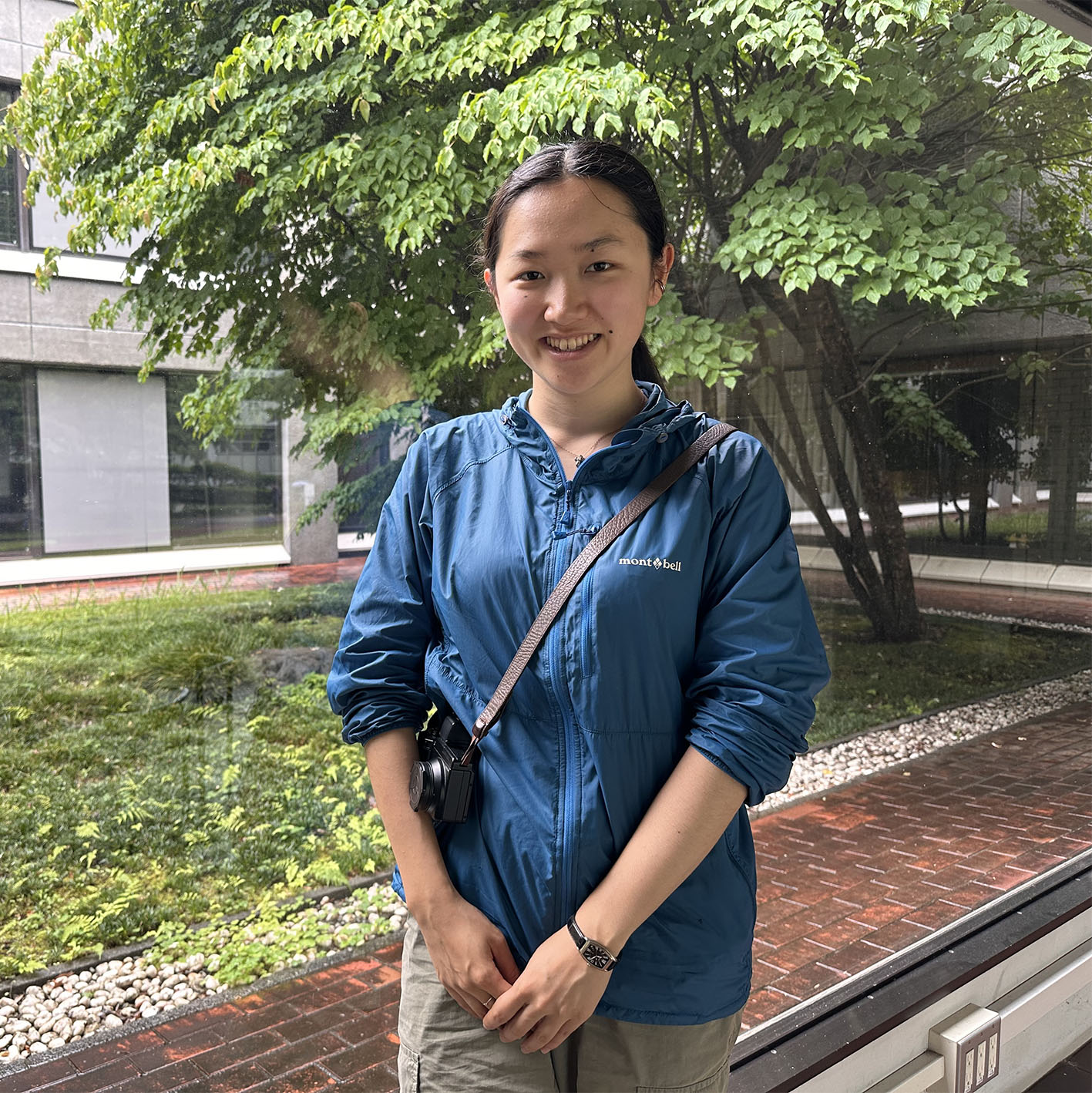
The Othmer Research Fellowship (ORF) provides funding to ICU students to conduct independent research projects during the summer break. We spoke with Michiru Sasaoka, one of the 2025 Othmer Fellows, about her research project. At the time of her fellowship, Michiru was a fourth-year undergraduate student at ICU.
JICUF: What inspired you to develop this project?
Michiru: I have always been particularly prone to mosquito bites, so summers can be quite difficult for me. Not only do I get bitten easily, but I also have a strong reaction to mosquito bites—they can be painful, itchy, and hot. To me, mosquitoes are truly my archenemy! That inspired me to learn more about them. I became interested in identifying the environmental factors and types of environmental stress that affect mosquito characteristics, such as body size.
For this project, I captured and recorded mosquitoes in central Tokyo and around the ICU campus. I collected and analyzed data on their physical characteristics and compared environmental factors in their habitats and breeding sites. Through this research, I hope to better understand the types and numbers of mosquitoes found in the Tokyo area, as well as the factors that influence their population growth and physical characteristics.
JICUF: Your research plan included building a mosquito trap using a 3D printer to efficiently capture large numbers of mosquitoes. Were you able to complete the trap as planned?
Michiru: Unfortunately, I wasn’t able to complete it during the research period. Originally, I planned to purchase and use a mosquito trap developed by the U.S. Centers for Disease Control and Prevention (CDC). However, each trap costs about ¥69,000, so I thought I might be able to build one myself instead. I started making prototypes and purchased a CDC trap to compare its performance with my design. Through that process, I discovered that the CDC trap did not work as well as I had expected and that transporting the dry ice used to attract mosquitoes was quite difficult. I also ran into limitations with the 3D printer I was using. After making several components, I eventually decided to abandon the project.
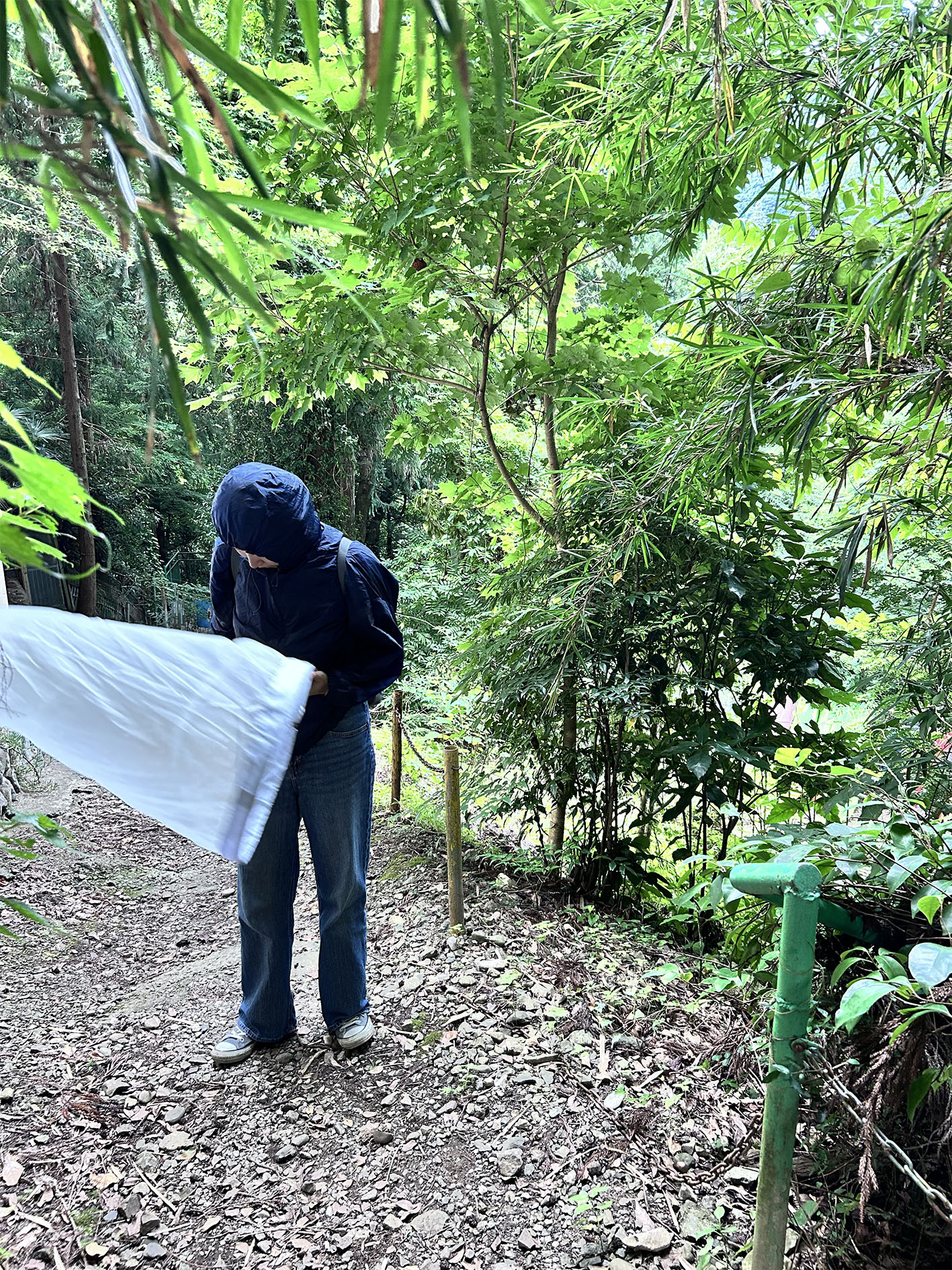
Without a trap, I had no choice but to go out and collect the mosquitoes myself. I headed to parks and wooded areas carrying a large, fine-mesh insect net and wearing protective clothing from head to toe to avoid getting bitten. This method is called human landing catch, in which a researcher acts as bait by standing at a research site for eight minutes and collecting mosquitoes that approach to feed.
JICUF: Did the fieldwork go as planned? Were there any unexpected challenges or difficulties?
Michiru: I selected seven research sites, including the ICU campus, Kasai Rinkai Park, and Showa Kinen Park, and conducted fieldwork from early July through early October last year. As I mentioned earlier, mosquitoes seem to like me, so attracting them wasn’t really a problem! At one site in Tachikawa, I collected as many as 140 mosquitoes in just eight minutes.
On the other hand, there were days when I found almost none, depending on when I conducted the survey. After three months of fieldwork, I found that mosquitoes were largely absent during periods without rainfall. Working outdoors in the extreme summer heat was extremely challenging and, at times, quite painful. I realized how important it was to take care of my health in order to continue the fieldwork. Learning how to manage my own health and well-being was an unexpected but valuable outcome of the project.
JICUF: What did you do after completing the fieldwork?
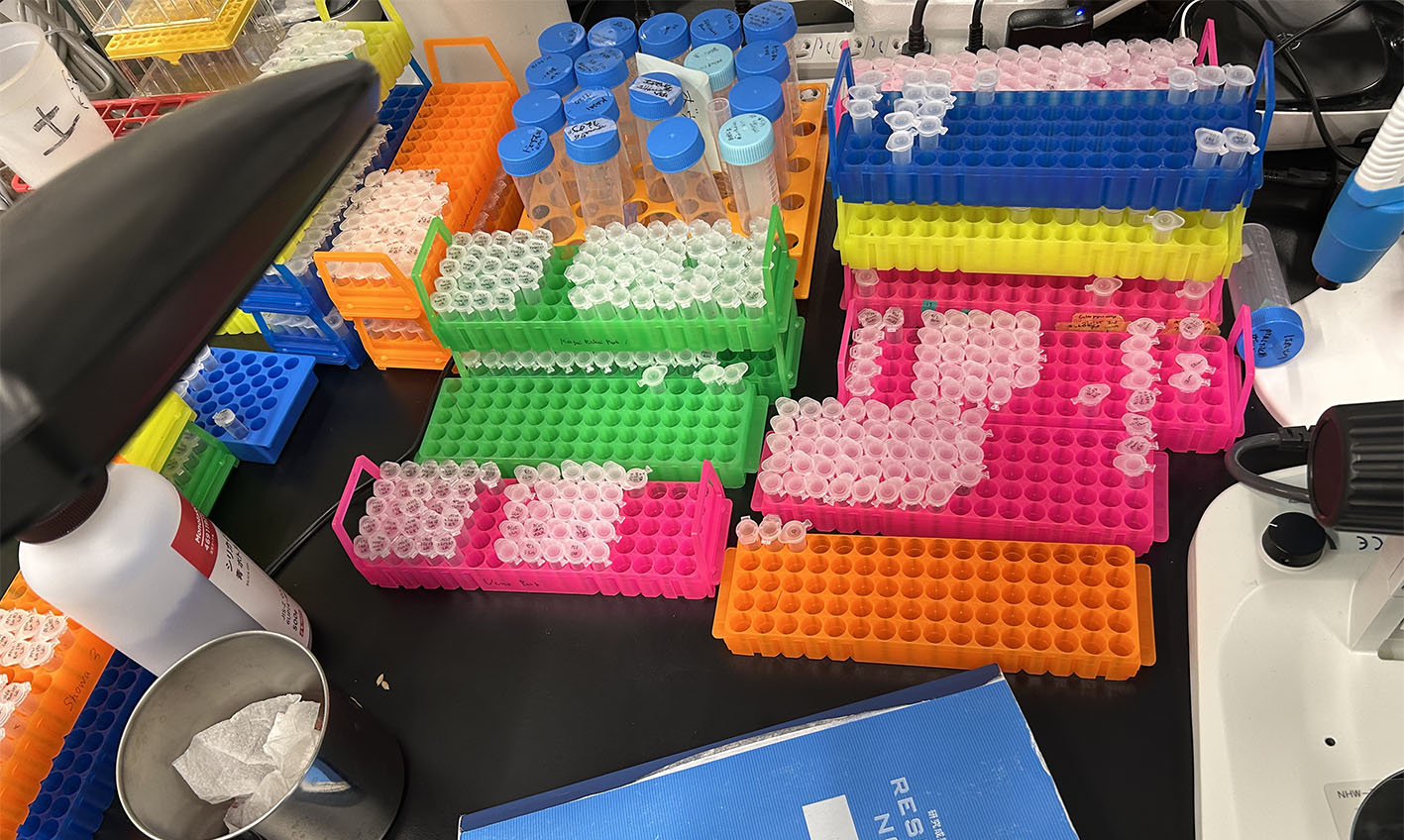
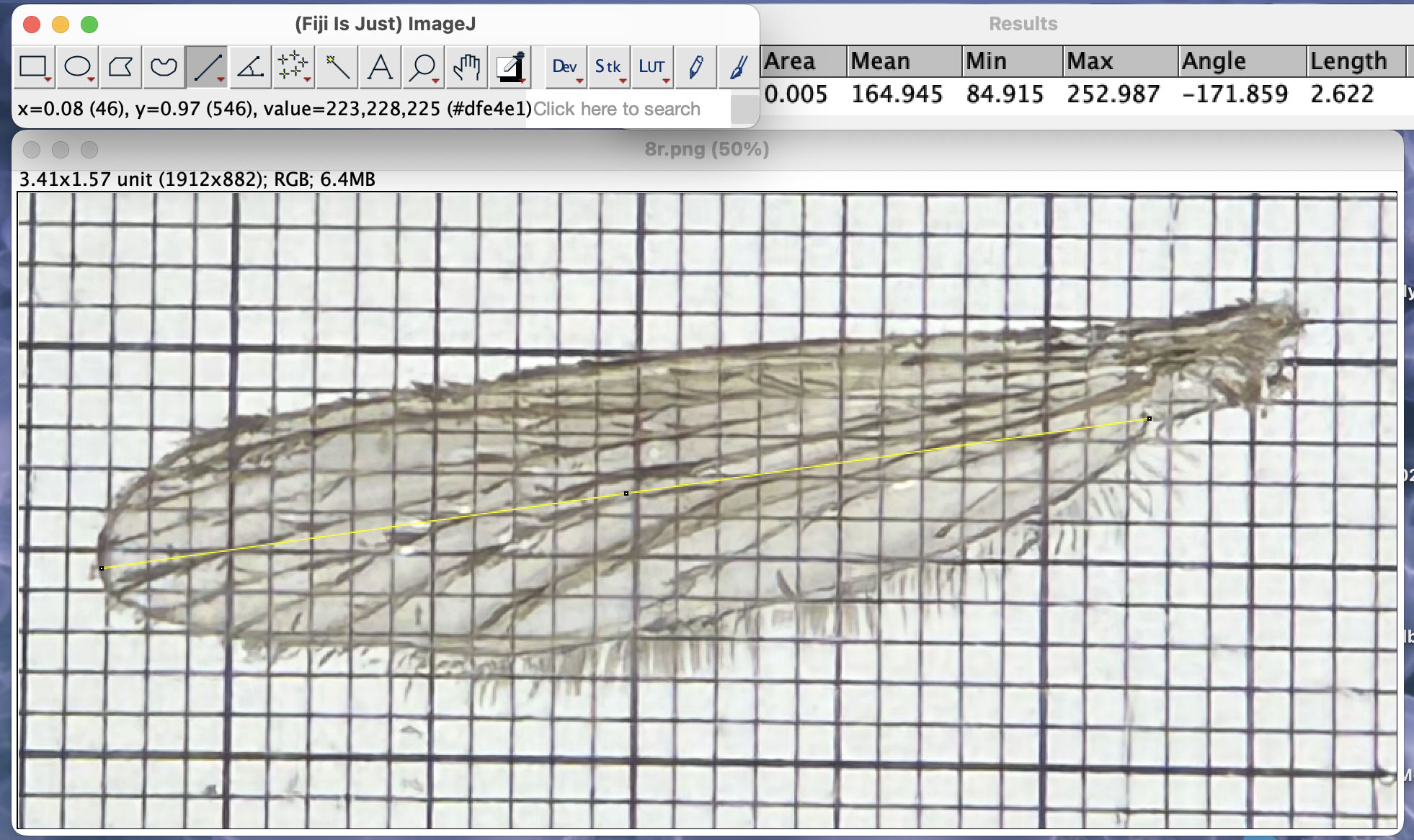
Michiru: I examined a total of 913 female mosquitoes collected during the fieldwork. I measured the wing length of each mosquito and recorded the data along with information such as where and when it was captured. By analyzing this data, I can begin to see how differences in environmental conditions may affect mosquito development.
*The photo on the right and the two below were provided by Michiru.
The significance of this research lies in helping prevent the spread of dangerous and potentially fatal mosquito-borne diseases that could enter Japan. The risk of such diseases may increase with rising temperatures and the movement of people and goods associated with globalization. By understanding where mosquitoes live, what characteristics they have, and what environmental factors affect them, researchers can identify effective measures to prevent the spread of mosquitoes and the diseases they carry, ultimately contributing to public health and well-being.
JICUF: What are your reflections on the project, and what are your goals for the future?
Michiru: Because this was a project that I designed and started from scratch, I learned a lot through trial and error—how to improve the project as I went along and, most importantly, how to take responsibility for every aspect of my research.
These lessons were just as valuable as the research findings themselves, and they were one of the greatest things I gained from the Othmer Research Fellowship. For field-based research to produce reliable results, I need at least two years of data. So, I am continuing the fieldwork this year. I am also planning to test a hypothesis that emerged from last year’s research by raising and monitoring mosquitoes in the laboratory under controlled environmental conditions.
JICUF: Thank you, Michiru! We look forward to seeing what new findings emerge from your continued research!


