
Alumni Stories No. 28 – Dr. Keigi Fujiwara
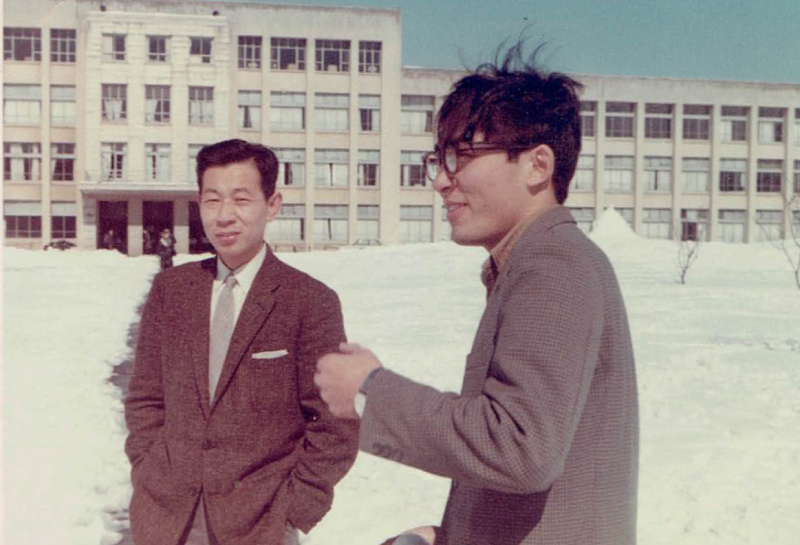
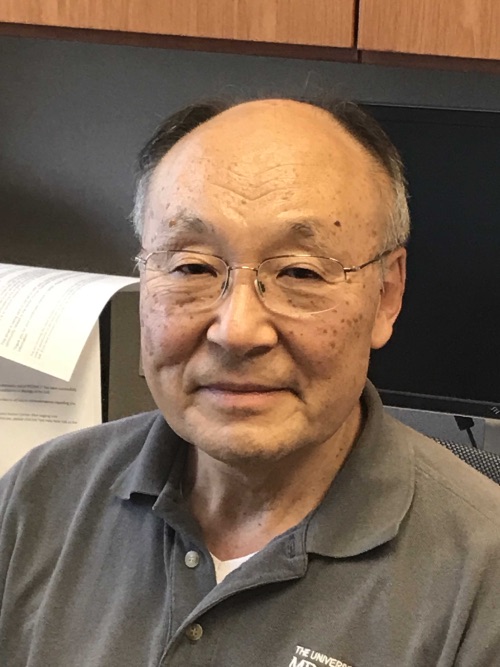
Born the son of the head priest in a temple in Shimane, Dr. Keigi Fujiawara studied biology at ICU and graduated in 1968. He went on to earn his Ph.D. from the University of Pennsylvania and began an illustrious career as a faculty member at the Harvard Medical School, the University of Rochester, and the University of Texas MD Anderson Cancer Center among others. JICUF staff and trustees were fortunate to meet him at the dinner with alumni and friends in Seattle this March, when we had our board meeting there.
We asked Dr. Fujiwara to write about his life, including how the heir to a Buddhist temple ended up at ICU, and built his career in the U.S.
——————————
I was born at a Buddhist temple in a small village halfway up the Chūgoku Mountains in Shimane Prefecture. According to the oral tradition passed down by successive head priests, the temple is said to have been founded during the Ōei era (1394–1428), but it wasn’t until the mid-Edo period (1725) that a resident priest began living there permanently. At the time of my birth, my grandfather was the 23rd head priest, and my father, while working as a high school teacher, was preparing to succeed him as the 24th. As I was the eldest son, I was treated from the outset as the future 25th head priest. As soon as I was able to walk and learned to sit and stand still, I remember being taken by my grandfather and father to various temple events. By the time I reached middle school, however, such training stopped, and I grew up as an ordinary child.
If asked whether I was taught anything about Buddhism as a child, I have no such memory. What I do remember is being taught the importance of practice. As for what that practice meant, I feel I learned it by observing how the adults in the family dealt with events that occurred in daily life, some of which I still remember. Because my childhood was in the years immediately following World War II, I often saw beggars climbing the long stone steps to come to our house. My mother would sit politely at the entrance and listen attentively to their requests. Some asked for food, others for a place to sleep, and occasionally for work. Those who asked for food were served whatever was available that day and invited to eat on the porch of the main hall, always finishing with tea. During the meal they were treated as honored guests. Being a young child, I had no other experience on how to treat these unfortunate people, so I understood that what I saw was the normal thing to do; that they were treated with respect, kindness and politeness.
One memory stands out vividly. One day, I watched from behind a pillar as a beggar, who appeared to be about the same age as my mother, silently extended an empty bowl toward my mother. The woman kept her head deeply bowed from the start and never once showed her face. My mother took the bowl, washed it carefully in the kitchen, filled it with leftover rice porridge from our lunch, and handed it back. The woman received it, bowed deeply without meeting my mother’s eyes, and quickly left. All this must have taken place in less than 5 minutes, and no words were spoken. My mother later said to me, “She must have come from a good family and may have lost her family to war.” Our mountain village was less than 100 miles from Hiroshima City.
For those seeking a place to sleep, bedding was kept in a corner of the main hall where they could stay. The main hall and the living quarters were separated only by a sliding paper door, and I later heard that relatives had warned it was unsafe to let beggars stay overnight. Nevertheless, as long as people came seeking shelter, my family continued to receive them. Those who asked for work were fewer, but there were some. A small shed on the temple grounds served as storage for farm tools, a chicken coop, and a restroom for visitors; it also included a small tatami-floored living space. Drifters looking for work would live there, earning modest wages by helping with farm work, chopping firewood, and cleaning the grounds. Three meals were provided as well as a warm bath at the end of the day. Some stayed for two or three months, although most left after a few weeks once they had saved a little money.
I believe these experiences took place over just five or six years after the war. By the time I entered elementary school, beggars no longer came. Yet, during that brief period of time, I learned—without any formal instruction or deliberate effort—that one should treat all people equally and without discrimination, just as my parents and grandparents did.
As mentioned earlier, my father supported the family with his salary as a high school teacher. When I was in high school, he asked if I would be interested in applying to a program called AFS (American Field Service), which allowed high school students to study in the United States for a year. To make a long story short, I decided to try, applied in haste, and fortunately was selected. I spent a year living as a member of an American family, attended high school, and was even able to graduate as a regular student. This experience became a turning point that changed my life.
When the one-year-stay in the USA ended in July 1963, about 150 of us returned to Tokyo on a chartered plane. With university entrance exams looming just six months ahead, I remember discussing on the plane which universities we would apply to. Among names like the University of Tokyo, Kyoto University, and Tokyo University of Foreign Studies, I heard mention of ICU (International Christian University), though, coming from the countryside, I had no idea what it was. Listening quietly, I gathered that the ICU entrance exams were so unique that the conventional entrance exam preparation could not always guarantee success. Within months after returning to my Japanese high school, it became time to submit university applications. When I went to see the college adviser at my school, I was simply told to get advice from my father.
That evening, my parents sat down with me to discuss my future. Basically, they wanted me to identify several universities I wanted to go to. The next day, I went to the library and collected information on major universities and colleges including ICU. I learned that a number of students chose ICU even over the University of Tokyo, which suggested that ICU had a special appeal and might be a place to entrust my future.
The biggest issue was that I was the son of a Buddhist priest and an expected heir while ICU was a Christian university. I wrestled with this for some time before eventually confessing my wish to my parents. When I told them I wanted to apply to ICU, both initially seemed surprised but did not immediately oppose it. After a while, my mother said she thought that education at a university with religious background would enrich students. My father then added that he believed the ultimate goals of Christianity and Buddhism were the same. Both also felt that ICU’s international character could contribute to building a world without war. What I had expected to be an all-night affair ended in about thirty minutes, and the rest of the evening turned into an enjoyable family conversation about ICU’s founding principles, entrance exams, competitiveness, and tuition.
In late February 1964, I went to ICU, took the entrance exams. The admissions results were scheduled to be announced on the same day as my high school graduation. In those days, ICU posted successful students’ registration numbers on a large wooden board on the campus. A relative in Tokyo went to the campus to check the result. The graduation ceremony was long. When it finally ended, I went with friends to the staff room to thank our teachers. On the hallway wall was a bulletin board listing the names of students who passed the entrance exams to various colleges and universities. Glancing at it, I saw my name! My relative had checked the results and sent a telegram to my school addressed to me which read: “Accepted. Happy for you.”
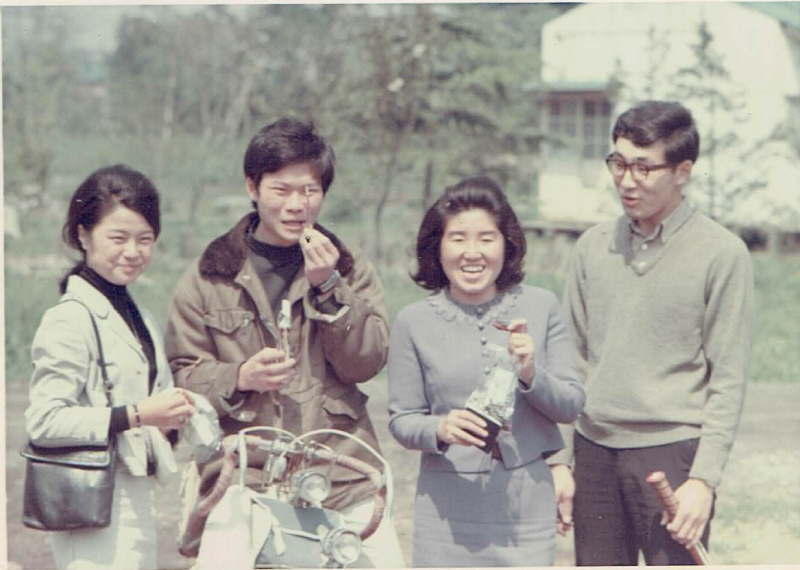
I entered ICU as a language major. I was interested in how we were able to understand what others said regardless of whether they were adults or children, men or women, foreigners, or people with accents. Since spoken language is sound, I thought there must be some common elements in the sounds people produce, and I wanted to study the mechanism for human vocal communication. However, when I shared my interest with Professor Ege, my assigned advisor, he said that no one at ICU specialized in that area and suggested I consult a professor in biology or physics. After much thought, I decided to switch to biology because understanding spoken words must involve the nervous system and the brain in addition to physical characteristics of sound.
Although I entered ICU, I had no knowledge of Christianity. Soon after enrollment, I attended Sunday services a few times. In short, however, I felt that these services were for pros, people who were already familiar with Christianity. Everyone else seemed to share something I did not have. I also tried attending a Bible study led by an elderly American professor, but again felt lost as the discussion went over my head. I asked some older students in my dorm who were devout Christians for advice. One told me to read the Bible repeatedly until I could accept everything in it without question or doubts. Another advised me simply to keep attending church. Finally, a senior in the Biology Department told me that there were many hints to understanding Christianity in the daily life at ICU, and that by discovering them one by one, I would gradually come to understand what Christianity was. This last advice was very meaningful to me: it suggested that I did not need to approach Christianity in a rigid, formal way, and that its spirit was already embedded in everyday campus life.
What I noticed first at ICU was the kindness and consideration shown by people working there toward students and one another—administrative staff, librarians, shopkeepers, postal workers, and groundskeepers alike. While similar courtesy could be found in department stores or banks, it felt trained and formulaic. At ICU, it was natural and genuine. Although one might attribute this to the “small village effect” of a compact campus, I felt it was more than that.
I also sensed this genuine, uncontrived quality in interactions with the faculty. Students were not treated as mere recipients of instruction, but as equal individuals. Dialogue was emphasized in classes, and there were many opportunities to visit professors’ homes or share meals with them. The relationship resembled friendship among equals rather than a hierarchical teacher-student dynamic. For example, I vividly recall that a professor of plant physiology asked a fourth-year student in organic chemistry to become a partner to study the entire book of advanced biochemistry textbook. Once a week, they got together and discussed reaction mechanisms of all the reactions described in the book; using a blackboard on which chemical formulae were written all over the place. Many professors lived on campus; one renowned geneticist held weekly open houses where students and staff gathered for conversation, tea, and sweets prepared by his wife. Although Christianity was never explicitly discussed, I felt its spirit—compassion, equality, and tolerance—underlay these interactions. These are qualities equally valued in Buddhism, echoing my father’s words that both religions had the same ideals, and my mother’s belief in the value of studying within a religious context.
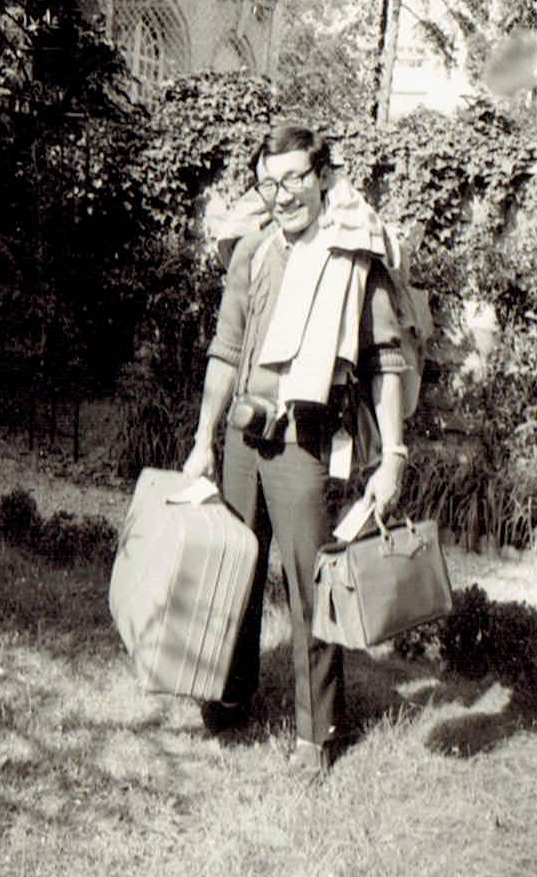
For me, religion is not about difficult philosophical arguments, grand rituals, or belief in miracles. It is a guide for daily life, especially in how we treat others. This belief stems from my childhood experiences and what I felt at ICU. If conflict, oppression, or politics are justified in the name of religion, then that is not true religion. When I was a graduate student at the University of Pennsylvania, I became close over several years with an elderly French Protestant pastor, Andre Levi Alvares. He often said, “I wish every day were Christmas.” By this he did not mean celebrating Christ’s birth daily or going to church, but rather that we should embody every day the kindness, care, compassion, and gratitude for life that many Christians share on Christmas day.
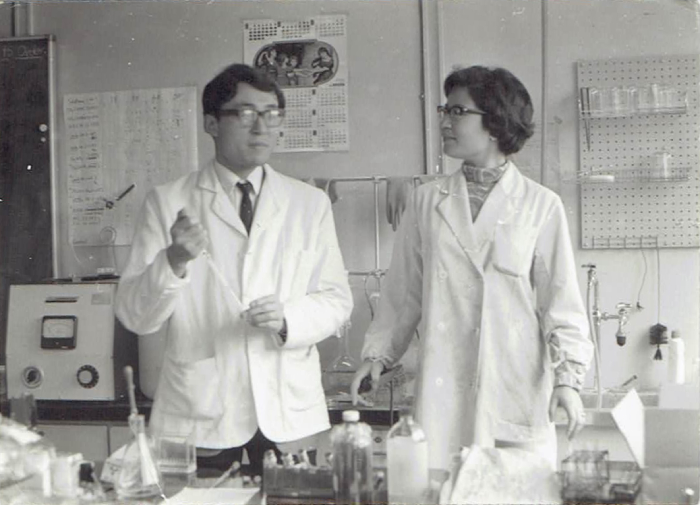
My education at ICU enabled me to earn a Ph.D. at the University of Pennsylvania, then spend eleven years in research and teaching at Harvard Medical School. Later, I established the Structural Analysis Department at Japan’s National Cerebral and Cardiovascular Center Research Institute, where, together with talented young researchers, we advanced studies on cellular mechanotransduction, which put our research group on the map. In 2000, I returned to the United States, working at the University of Rochester School of Medicine and the University of Texas MD Anderson Cancer Center before retiring in 2021. That someone born in a remote mountain village in Shimane could spend over half a century as a biomedical researcher and educator is something I firmly believe would not have been possible without my parents’ openness and the education I received at ICU.
ICU is a unique university: it is Christian yet has no theology department, and international yet has no college of international studies. Nevertheless, these two spirits are strongly embodied in its education and campus life. I hope this approach continues. In the meantime, I believe it is important for ICU alumni, in today’s troubled world, to continue actively working in their respective roles to tackle urgent global issues such as conflicts, extreme human suffering and environmental protection.
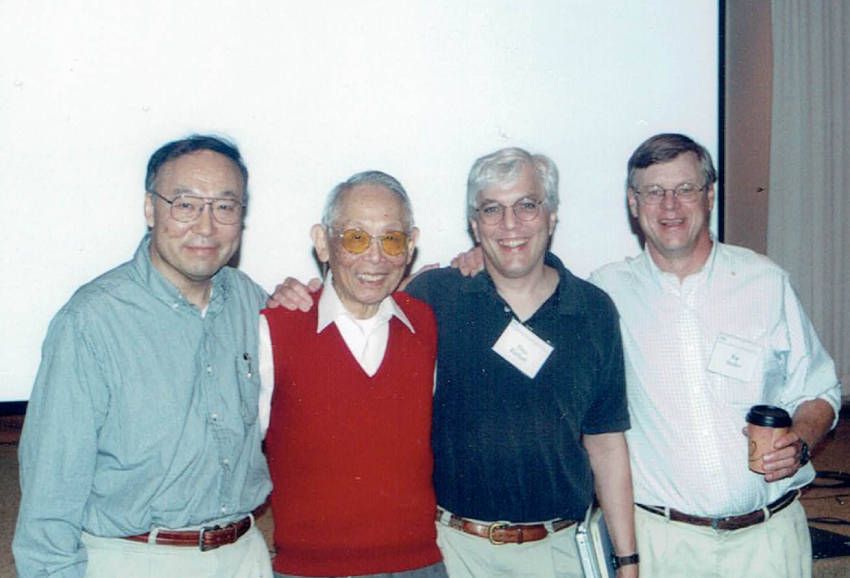
Postscript: To those wondering what became of the temple in Shimane, I am glad to say that my younger brother, who lives in Saitama and is a qualified priest, succeeded as the 25th head priest. He and I together spent ten years searching for the 26th successor, and two years ago, we were able to install a young priest as the 26th head priest.


