
JICUF Celebrates 10 Years of Supporting Refugee Education with Pathways Japan and the Canadian Embassy to Japan
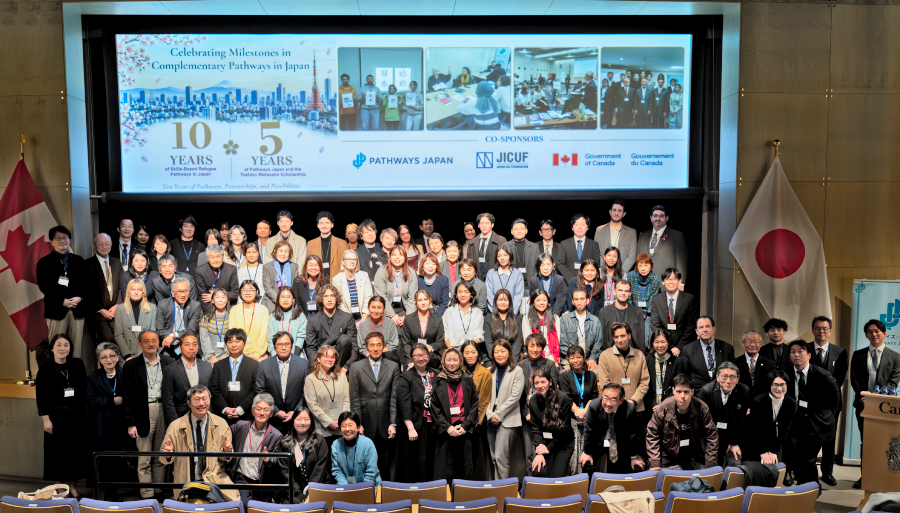
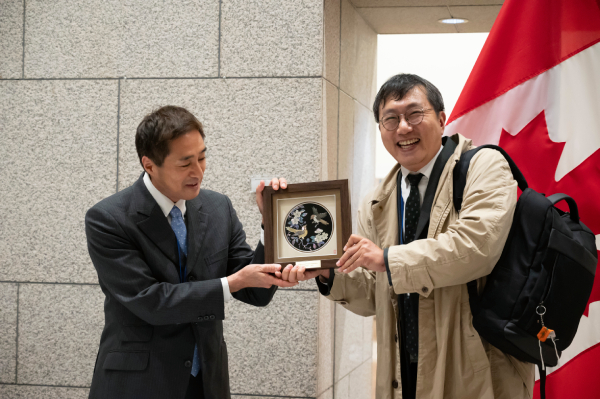
On November 10, the Japan ICU Foundation celebrated the 10th anniversary of “education pathways” in Japan with Pathways Japan and the Embassy of Canada to Japan at the Embassy in Downtown Tokyo. Education pathways are programs that enable refugees to move to a safe third country through educational opportunities and build sustainable lives.
More than 100 guests attended, including around 40 students. Other attendees included representatives of the UN High Commissioner for Refugees (UNHCR), educational institutions, corporations, NGOs, governmental organizations, donors and volunteers whose support was vital in developing education pathways in Japan.
In 2016, the Japan Association for Refugees (JAR) launched the Japanese Language School Pathways program. The next year, JICUF launched the first privately sponsored university pathways program at International Christian University, welcoming Syrian students from Turkey.
Since then, the programs have grown into a network of 23 language schools and 19 universities. To date, 232 students have been admitted to language schools from Afghanistan, Syria and Ukraine, and 102 scholarships have been awarded in Japanese universities. Pathways Japan (PJ) was established in 2021 and took over the pathways programs from JAR.
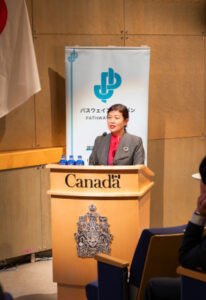
Laurie Peters, Deputy Head of Mission at the Embassy of Canada to Japan, opened the celebration with welcoming remarks. Norimasa Orii, Representative Director of Pathways Japan, and Aki Takada, JICUF Vice President, followed with a summary of the past 10 years.
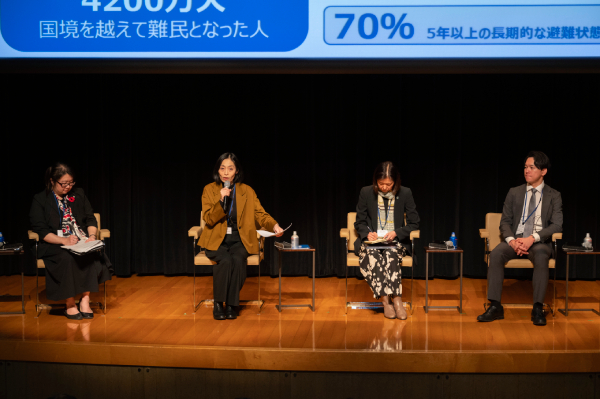
The main program consisted of two panel discussions – one with practitioners and the other with current and former students with refugee backgrounds.
In the first panel, Fumiko Kashiwa, Representative of UNHCR Japan, provided an overview of the global refugee situation. Mariko Iijima, Vice President of Sophia University, explained how her university began welcoming refugee students through partnerships with JICUF, PJ, and UNHCR. Shintaro Nakano, Executive Officer of Tokyo-based PR company Antil Inc., shared how hiring Ukrainian evacuee Maksym led to new business opportunities and encouraged other companies to actively recruit young people with refugee backgrounds.
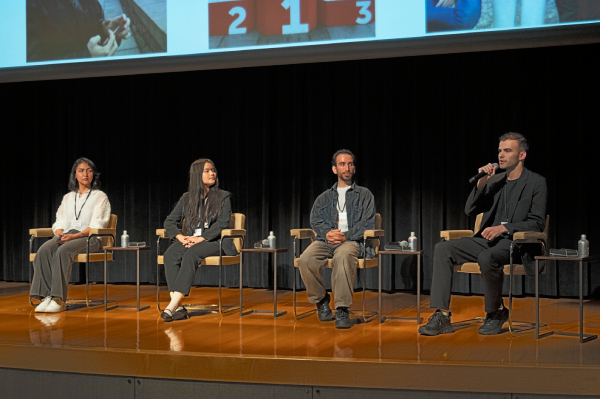
In the second panel, students and recent graduates from Afghanistan, Myanmar, Syria, and Ukraine shared their journeys, the challenges they have overcome, and their hopes for the future. Maksym, now working at Antil, emphasized that while hiring refugee youth may seem like a risk, innovation happens when diverse people come together and exchange ideas.
After the two panels, the guests gathered for a reception. The large number of students in attendance made the celebration particularly meaningful and joyful.

The 10th anniversary is a milestone, but there is still much work to be done. As conflicts persist and new crises emerge, and educational institutions face growing financial constraints, expanding education pathways remains a challenge.
We hope to shed light on the positive impact of education pathways, not only on the lives of the students themselves, but also on the universities and the societies they become part of.


