
Research Activities Presentation held by the Student Instructors from the LPF
On June 25, 2025, a presentation on the educational practices of Student Instructors (SI) in the Language Program for Faculty (LPF) was held in the conference room on the second floor of Dialogue House. JICUF supports this program through its faculty grant. Here is a report by Assistant Professor Sunyoung Chun.
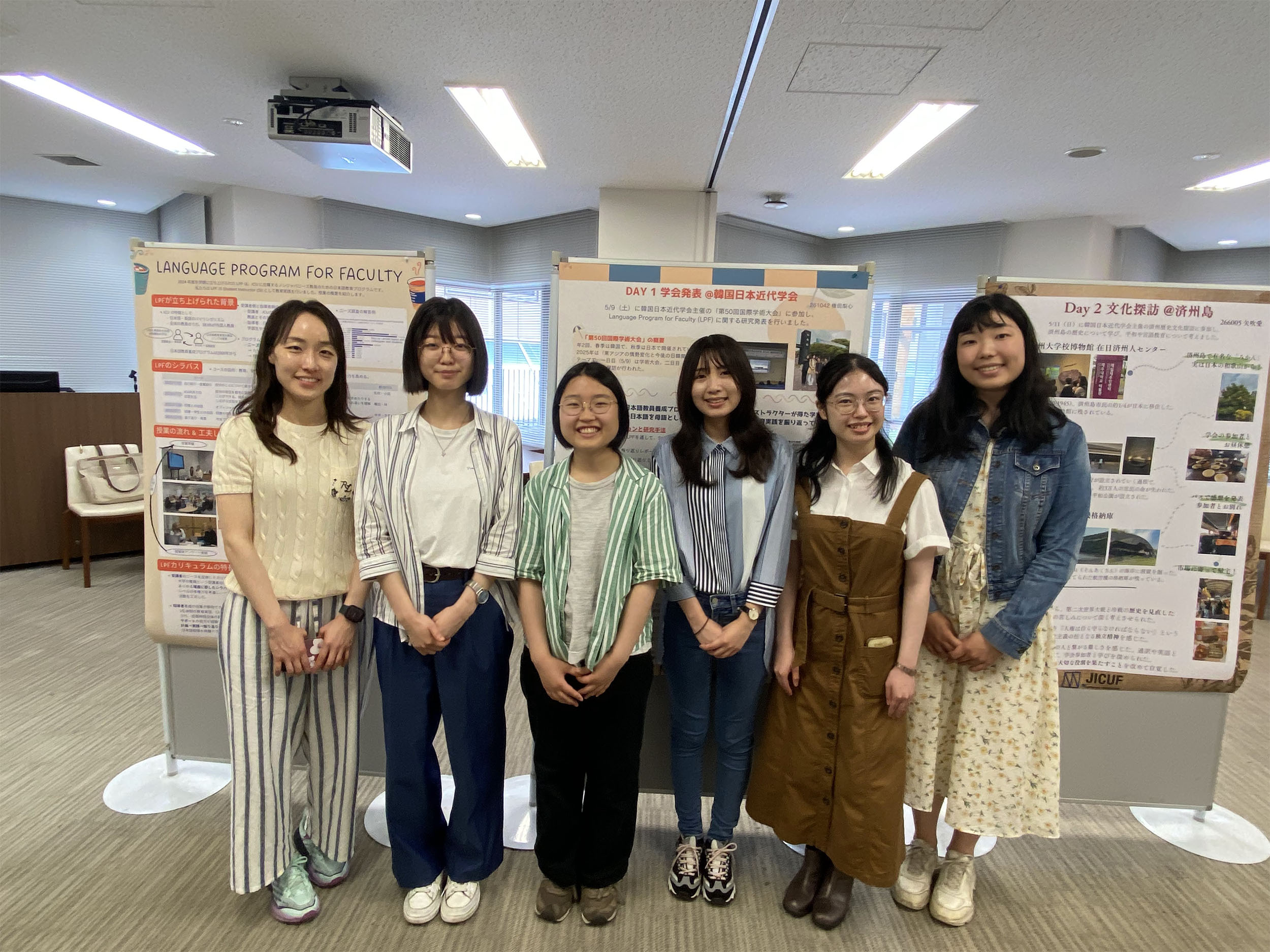
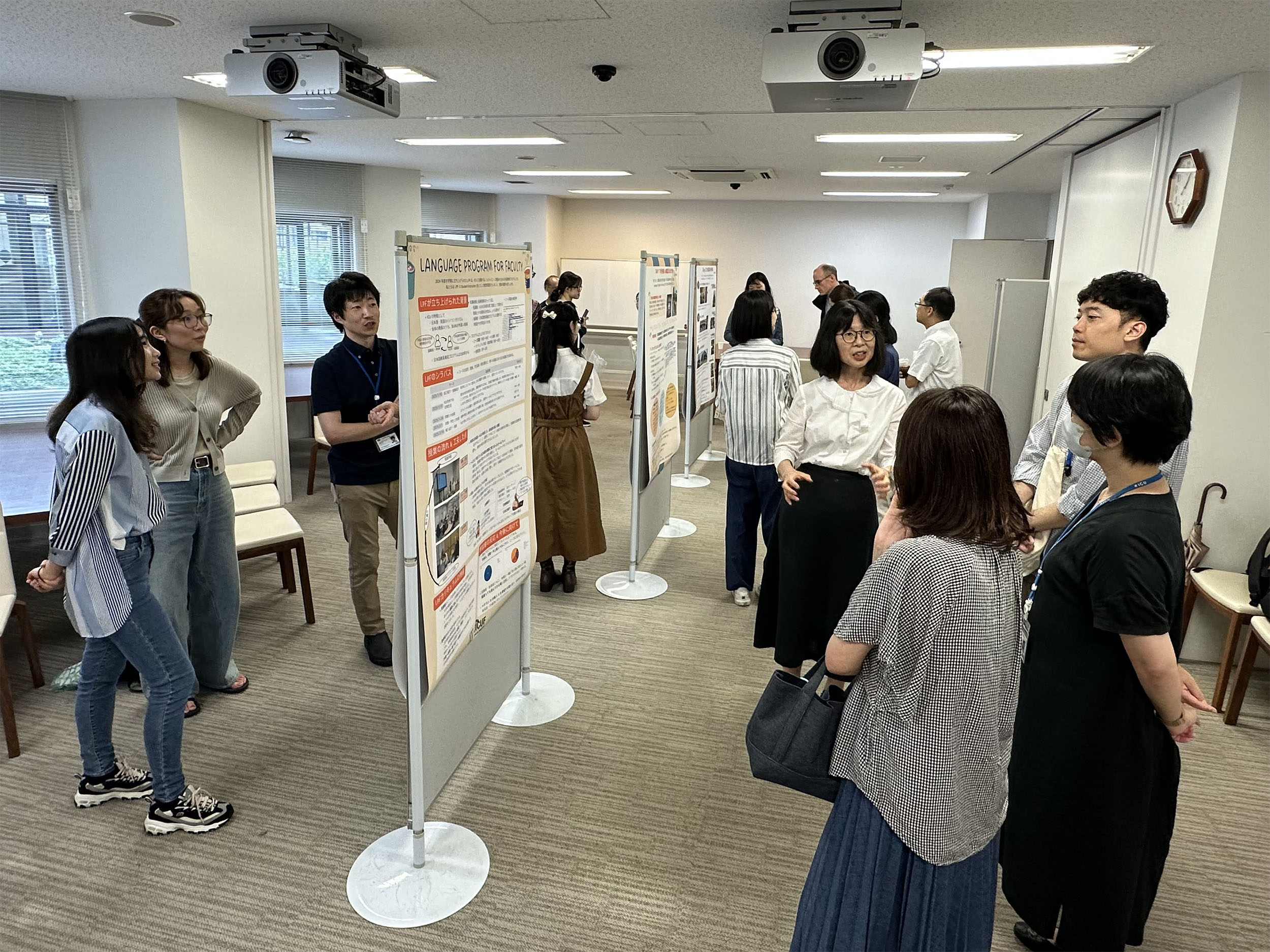
The LPF is the first program of the Center for Teaching and Learning (CTL) where ICU students enrolled in the Japanese Language Teacher Training Program teach Japanese to ICU faculty members and their families from non-Japanese backgrounds. It was established to address the needs of both faculty members who wish to learn Japanese and students who wish to gain experience in teaching Japanese.
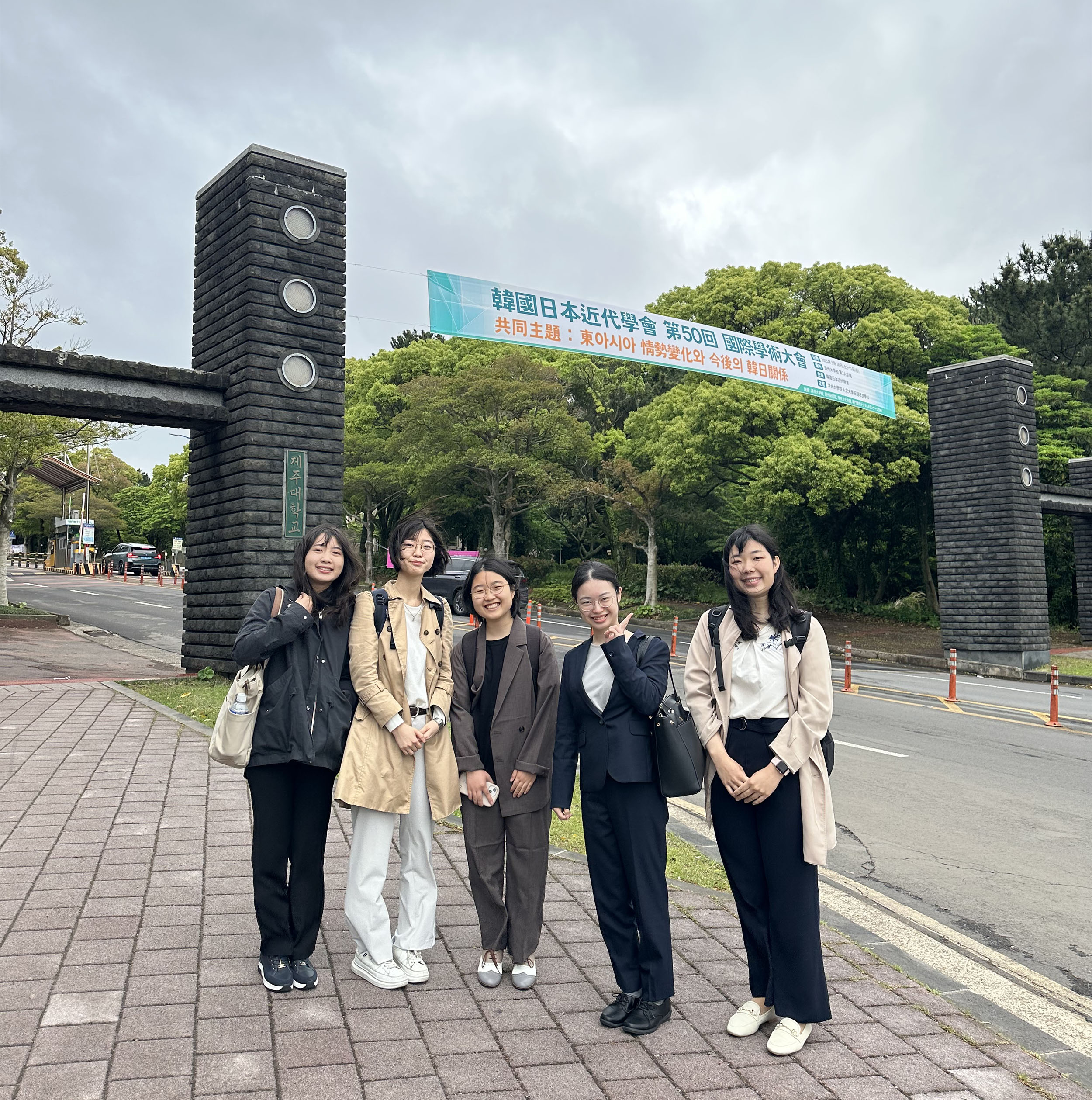
Five SI who gained experience teaching Japanese through the LPF in January and February 2025 reviewed their practical experiences and presented their findings at an international conference in May. In South Korea, where the conference was held, the SI also had opportunities to interact with local educators, researchers, and students, drawing on their practical experiences at the LPF.
To incorporate the insights gained from these activities into ICU’s future educational practices, an activity report presentation was held. In the conference room on the second floor of the Dialogue House, six posters were displayed with the following contents: (1) an overview of the LPF’s curriculum and materials, (2) the research presentation at the Japanese Modern Association of Korea (JMAK), (3) a historical and cultural tour of Jeju Island, South Korea, as part of the JMAK’s Korea-Japan exchange program, (4) an exchange session with students from the Department of Japanese Language and Literature at Jeju National University, (5) a class visit of a Japanese teacher education course at Hanbat National University, and (6) a classroom observation of Japanese language classes at Sehwa Girls’ Middle School. The SI reported on these activities to the faculty and staff members who had supported them and to students who were interested in the LPF. The discussions with visitors during the poster session served as an opportunity to articulate and share the current situation surrounding the SI, as well as to reconstruct the learnings gained through the LPF over the past few months. The following are the reflections of the five SI who presented their posters on the day.
Riko Gonda (4th year undergraduate student)
Our research presentation at the JMAK was an incredibly valuable opportunity for us to share the work we have been intently engaging in the LPF. There were many twists and turns leading up to the completion of our presentation; furthermore, we felt nervous since it was our first time attending an academic conference. Nonetheless, interacting with other researchers and receiving questions and feedback for our presentation was a great learning opportunity.
Additionally, being able to share our experiences from the Korea trip in the poster session back at our university provided a meaningful chance to reflect upon our activities. Above all, I am truly delighted that many participants showed interest in the LPF. The experience further strengthened my desire to contribute to and be involved in Japanese language education and the LPF.
Ai Yabuki(2nd year graduate student)
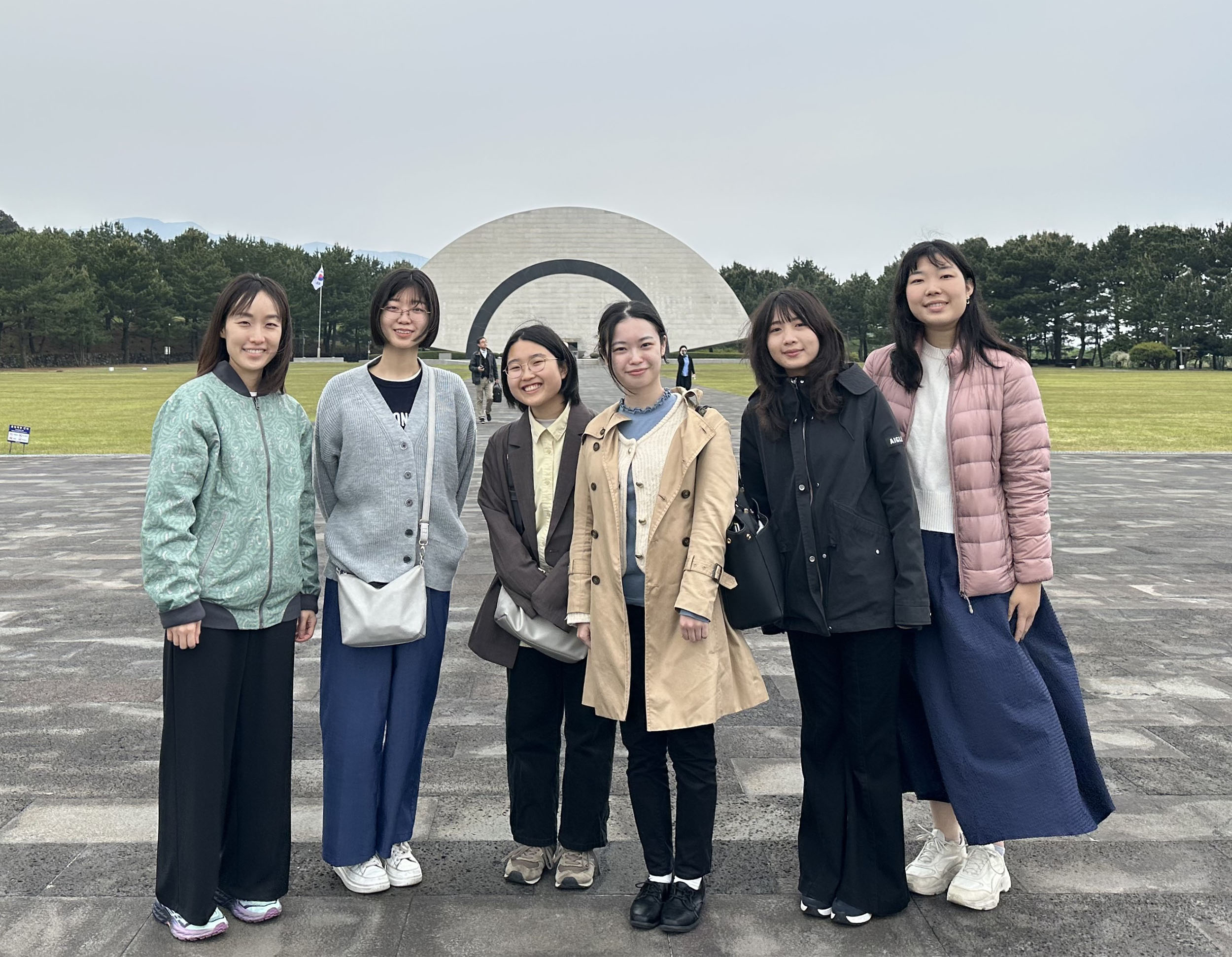
On day two of the conference, we participated in a cultural tour around the historic sites in Jeju Island. We learned about the history of Jeju Island and the lives of the Zainichi Jeju Koreans in Japan. At times, we experienced difficulty connecting with the local people due to the language barrier. However, with the use of mediating languages such as Japanese and the support of translators, we were able to share our insights with other conference participants and deepen our learnings. This experience reminded us of the important role that language education plays in bridging people and cultures.
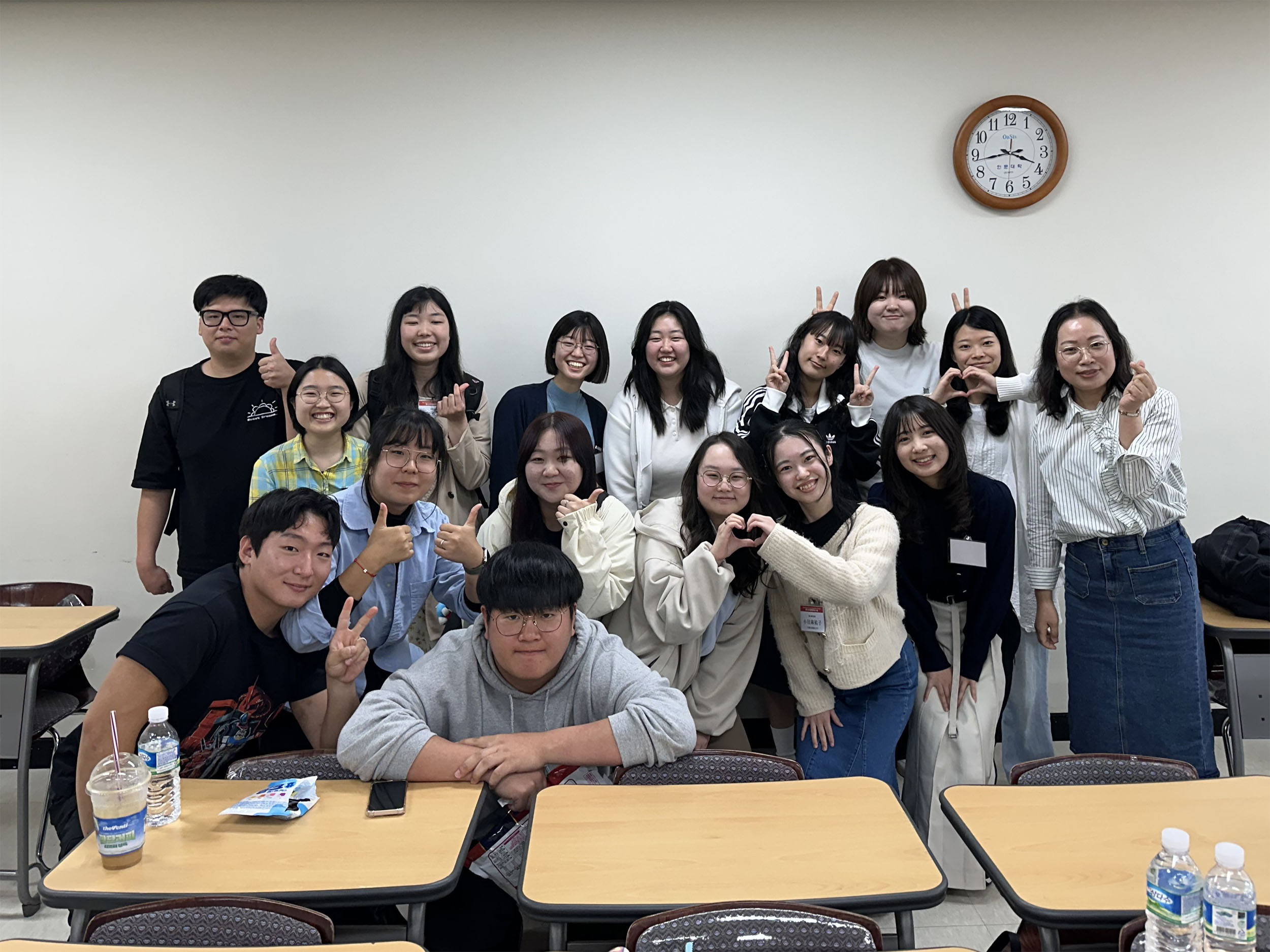
At the poster session, some faculty who had participated in the LPF, the faculty and staff who had supported the program warmly, and several students enrolled in the Japanese Language Teacher Program came to join. The chance to share our experiences and learnings in Korea was an invaluable experience.
Kano Hayashi(3rd year undergraduate student)
On the third day of the trip to Korea, we had an exchange session with about 10 students studying Japanese at Jeju National University. We shared about our university life and language education in Japan and Korea. We learned that the students were interested in Japanese pop culture and literature and that they used Japanese in their part-time jobs, which made us realize the significance of studying Japanese outside of Japan. During the poster session, we discussed with the participants about Korean students’ motivations for learning Japanese and the language education environment in Korea, and we were able to further deepen our thoughts on Japanese as a foreign language education.
Mayuko Oda (3rd year undergraduate student)
On the fourth day, our experience of visiting a Japanese language teacher training class and discussing with Hanbat National University students who aspire to become Japanese language teachers like us was an inspiring experience. After reflecting upon the class observations to prepare for the poster session, I feel that my view of Japanese language education has deepened.
For example, I recognized that it is possible to conduct highly-effective classes even with a predetermined set of teaching materials. Furthermore, just as the Korean university students thought of lessons that met learners’ needs, we were also conscious about designing lessons that met participants’ needs in the LPF. Furthermore, through discussing with the Korean university students who desire to become Japanese language teachers, we realized that we shared certain challenges.
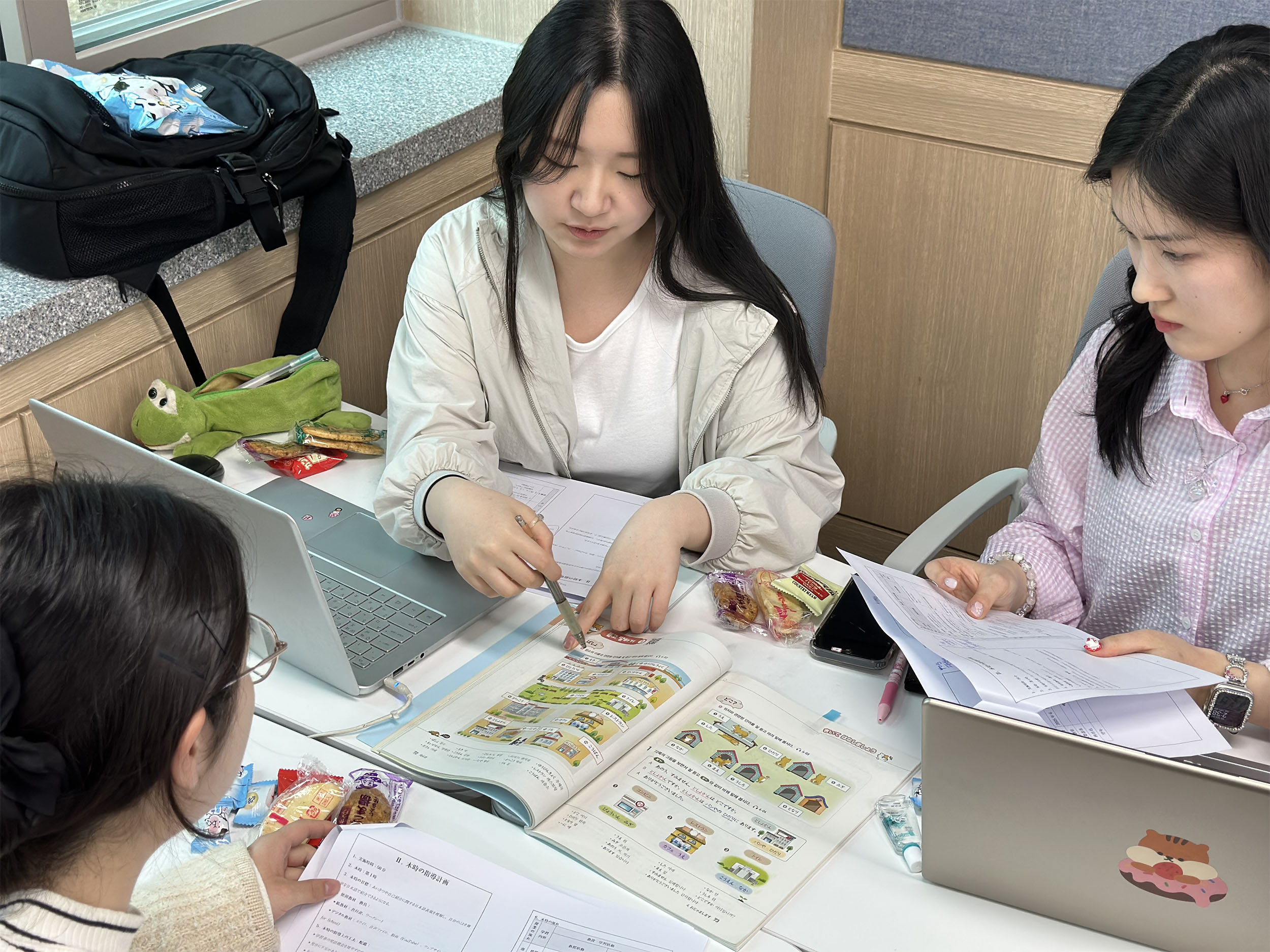
For example, keeping learners motivated was a challenge both for myself, a native Japanese speaker, and for some Korean students who shared the same first language as the target learners. While we learned a lot through the LPF, we could realize that there is still so much more to learn and explore. At the poster session, we received many questions from the participants. We were very happy to see their interest in the LPF and for the chance to share our experiences. Through interacting with the teachers and students in the Language Education Department, my desire to continue learning Japanese language education grew even stronger.
Chie Nakai(4th year undergraduate student)
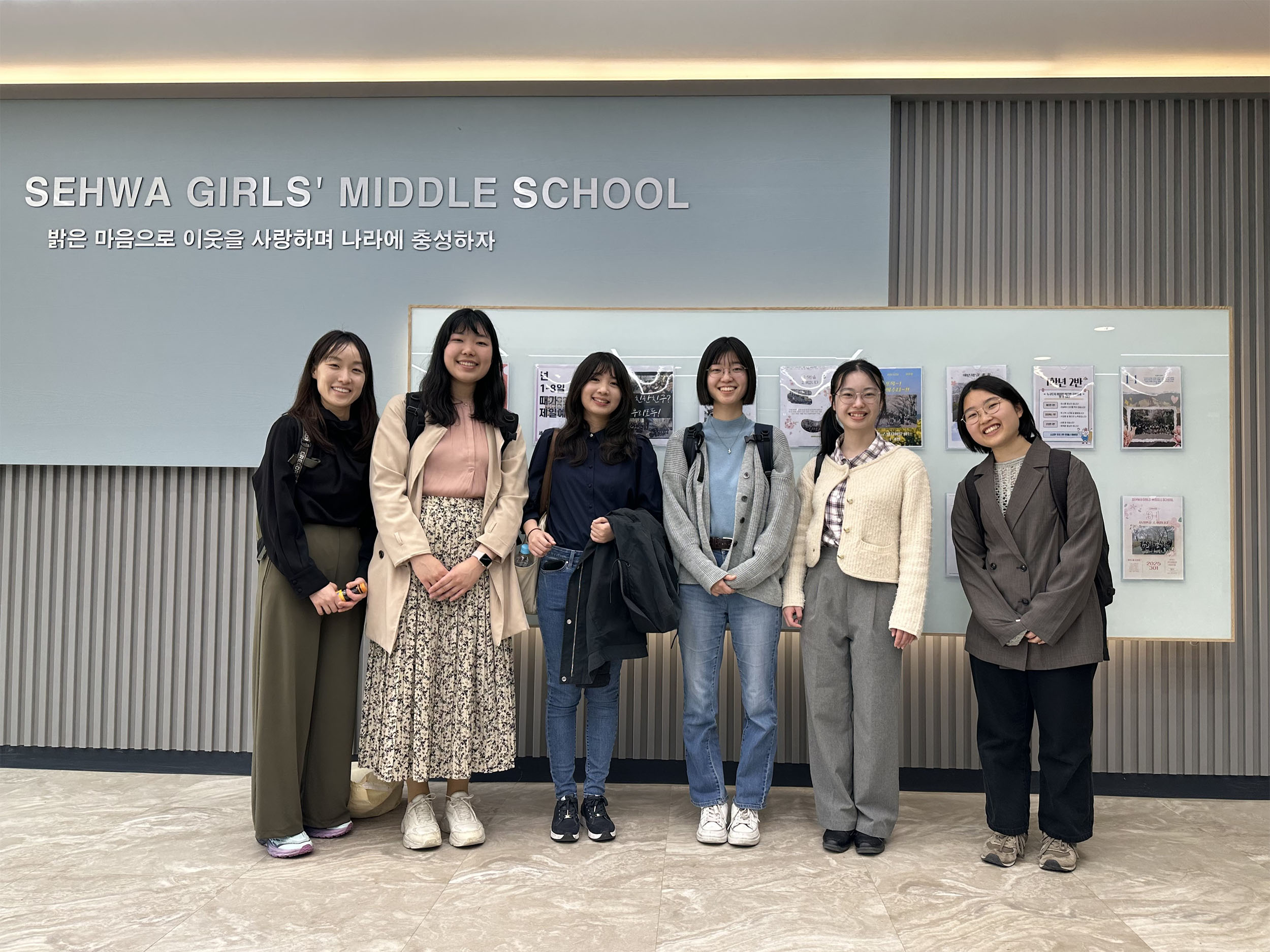
On the fifth day, while observing a Japanese language class at Sehwa Girls’ Middle School, we deepened our understanding of teaching Japanese as a foreign language overseas and the significance of learning Japanese abroad. In the class, with the learning objective of “being able to introduce others,” students participated in an activity where they created portraits and introductory sentences, allowing them to express their creativity and personal interests. Through these observations, we learned that learning Japanese overseas not only promotes linguistic diversity but also provides valuable opportunities for cross-cultural understanding. During the poster session, I discussed with participants the effectiveness of using “illustrations” as teaching materials and explored ways to apply the insights we gained in Korea to future LPF teaching practices.
Asst. Prof. Sunyoung Chun
The accomplishment of the program goals and the profound learning of the SI within it would not have been possible without the support of JICUF. We would like to express our sincere gratitude to JICUF for its generous support for this valuable opportunity.


