
Faculty Grant Project Report “ICUHS School Farm to Table”
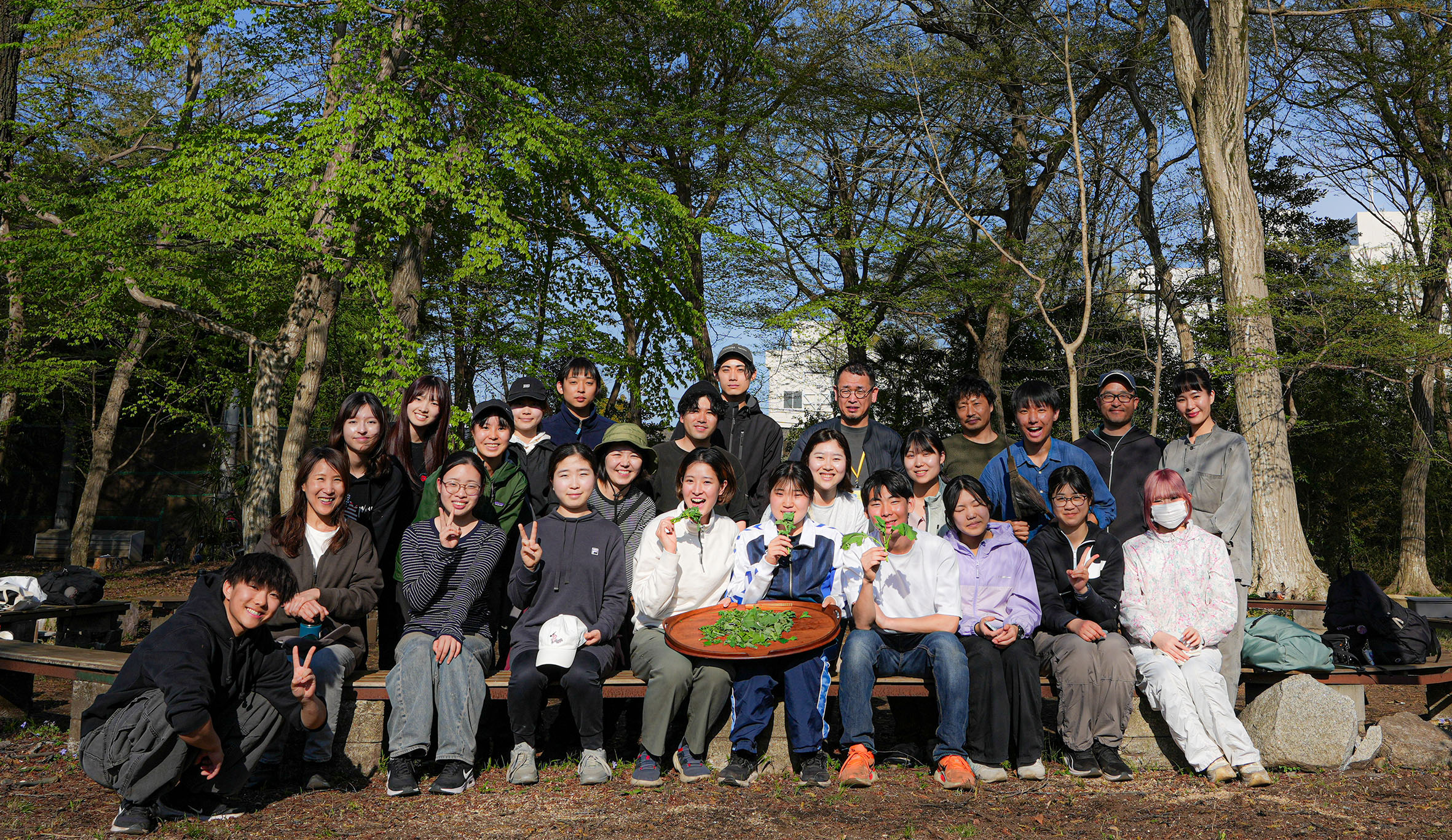
In addition to the “SDG Project” grants for students, JICUF also offers grants for faculty and staff. In fiscal year 2025, we provided a total of 9,485,960 yen in grants to 10 faculty and staff projects. One of these was the “ICUHS School Farm to Table” project led by Minako Kuhara, the International Programs Coordinator at International Christian University High School. In 2022, ICU High School launched “NO AGRI NO LIFE/ NO 農 NO LIFE” as part of its Global Learning Programs, offering students hands-on learning opportunities about agriculture and environmental issues. This is a voluntary group activity involving teachers from various subjects, such as science and home economics, and bringing together interested students.
The “ICUHS School Farm to Table” project, conducted as part of “Agri LIFE,” hosts a variety of activities such as maintaining the school vegetable garden and orchard, composting, cooking and eating harvested produce together, and lectures on regenerative practices. JICUF provided 575,000 yen to support activities from July 2025 through June 2026. On April 3, the “Mori Megu” event was held, where participants toured the university and high school campus to learn about its nature, and then cooked and socialized using ingredients harvested from the high school garden as well as those from the campus’s natural environment. Below is Minako Kuhara’s report on the event.
Mori Megu: Walk around and Feel the Gift of the ICU Mitaka Campus Woodland!
ICUHS AGRI LIFE/農LIFE is an experiential learning program about agriculture and environmental issues. Activities take place in the vegetable gardens at ICU High School and the natural environment within the ICU campus. On April 3, with the cherry blossoms in full bloom, we held an event where we walked through ICU’s woodland together and harvested and tasted its gifts with the chefs and staff from Maruta, a restaurant in Jindaiji, Chofu City. Using all five senses, we observed the various edible plants and living things that coexist on campus and learned about the value of ICU’s beautiful natural environment and biodiversity.
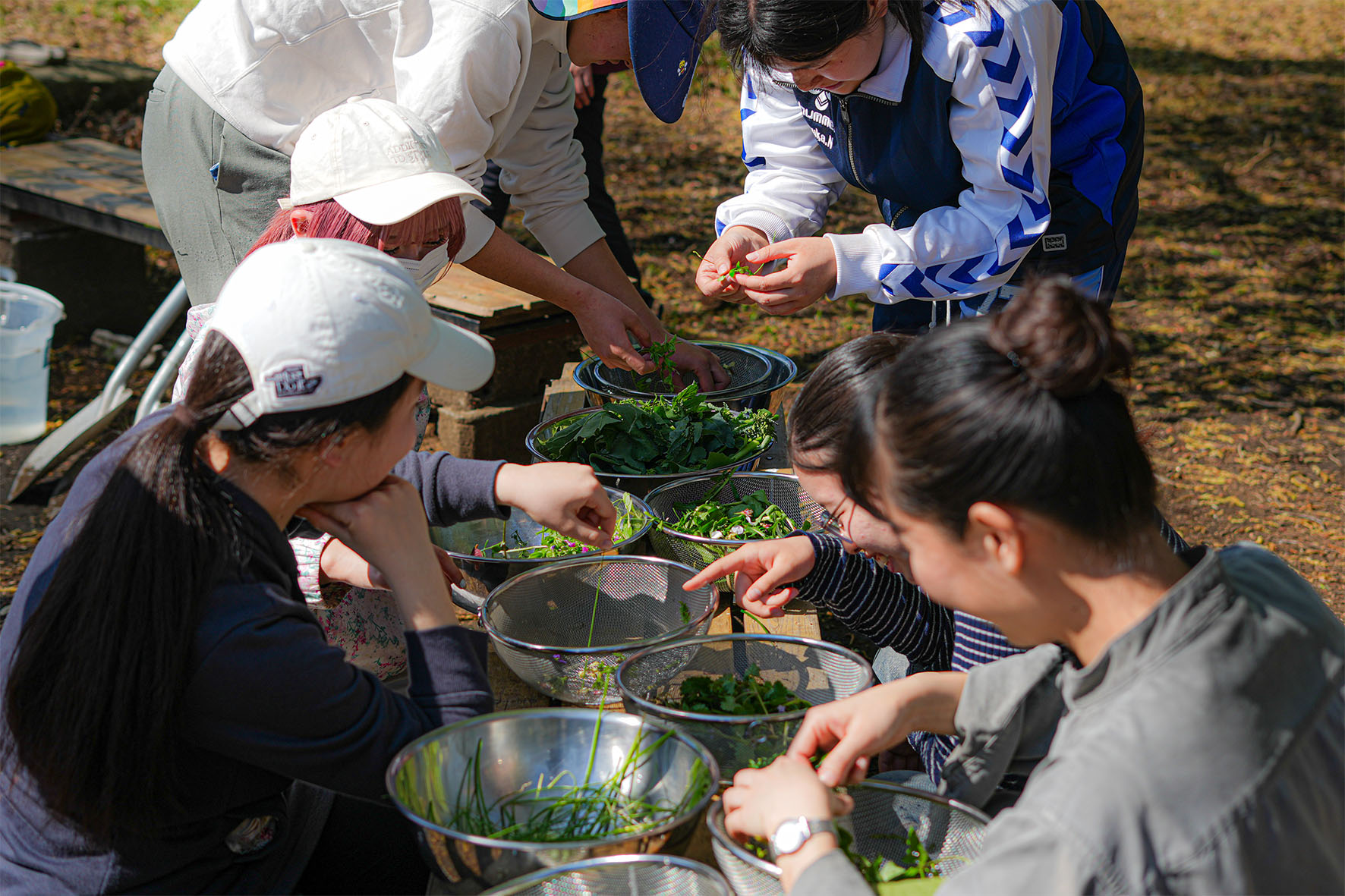
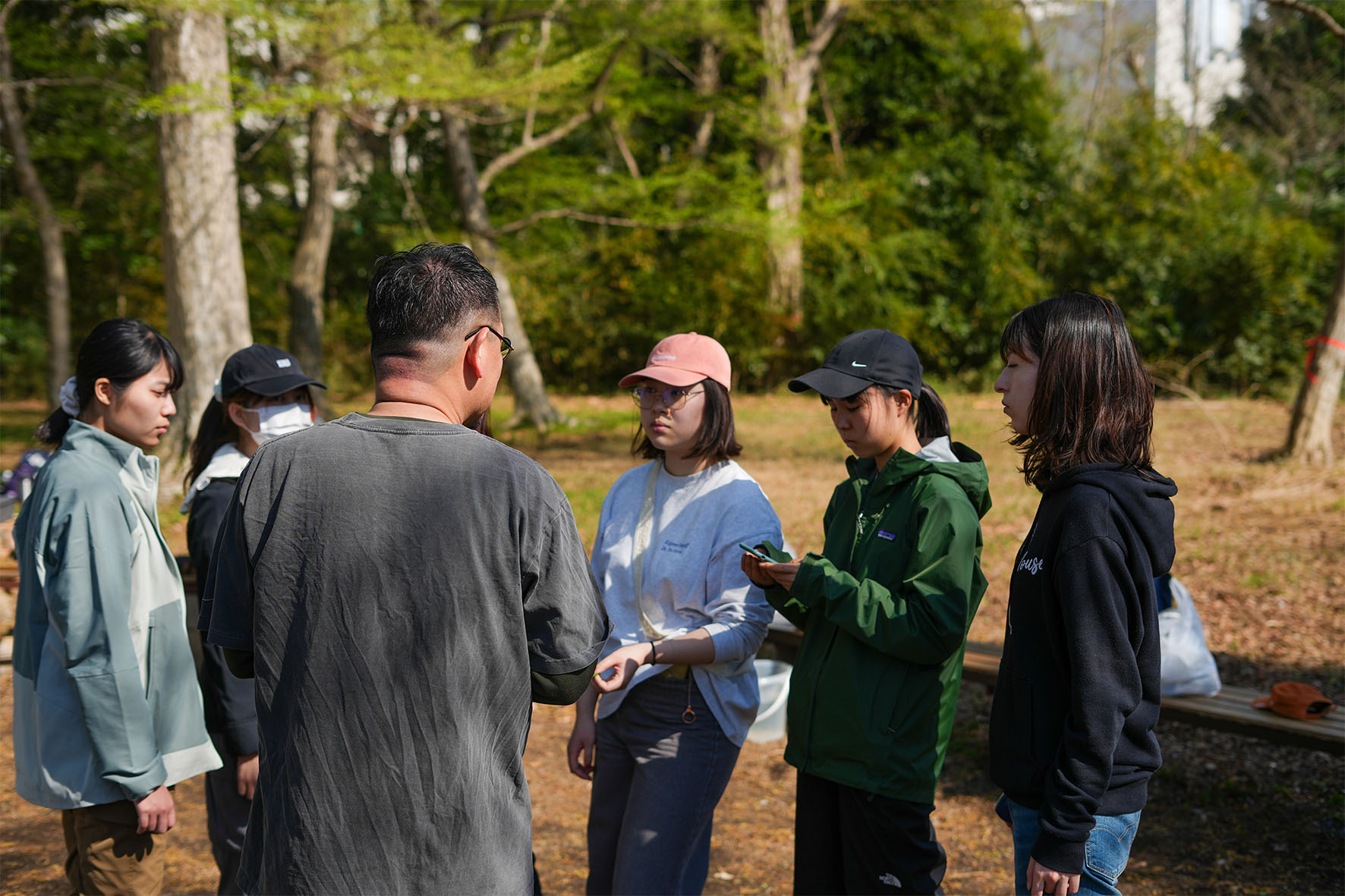
First, we harvested some kakina (Brassica rapa) and wild arugula grown in the high school garden, then headed to the university campus. We walked through the vibrant spring campus, observing and tasting edible spring wild greens and useful plants along the way. On the way to the campsite, we also learned about the university’s initiatives, such as the dead hedge and the Coppice Forest Restoration Project, which are part of the ICU Mitaka Campus Woodland, a certified “Natural Symbiosis Site” by the Japanese Ministry of the Environment.
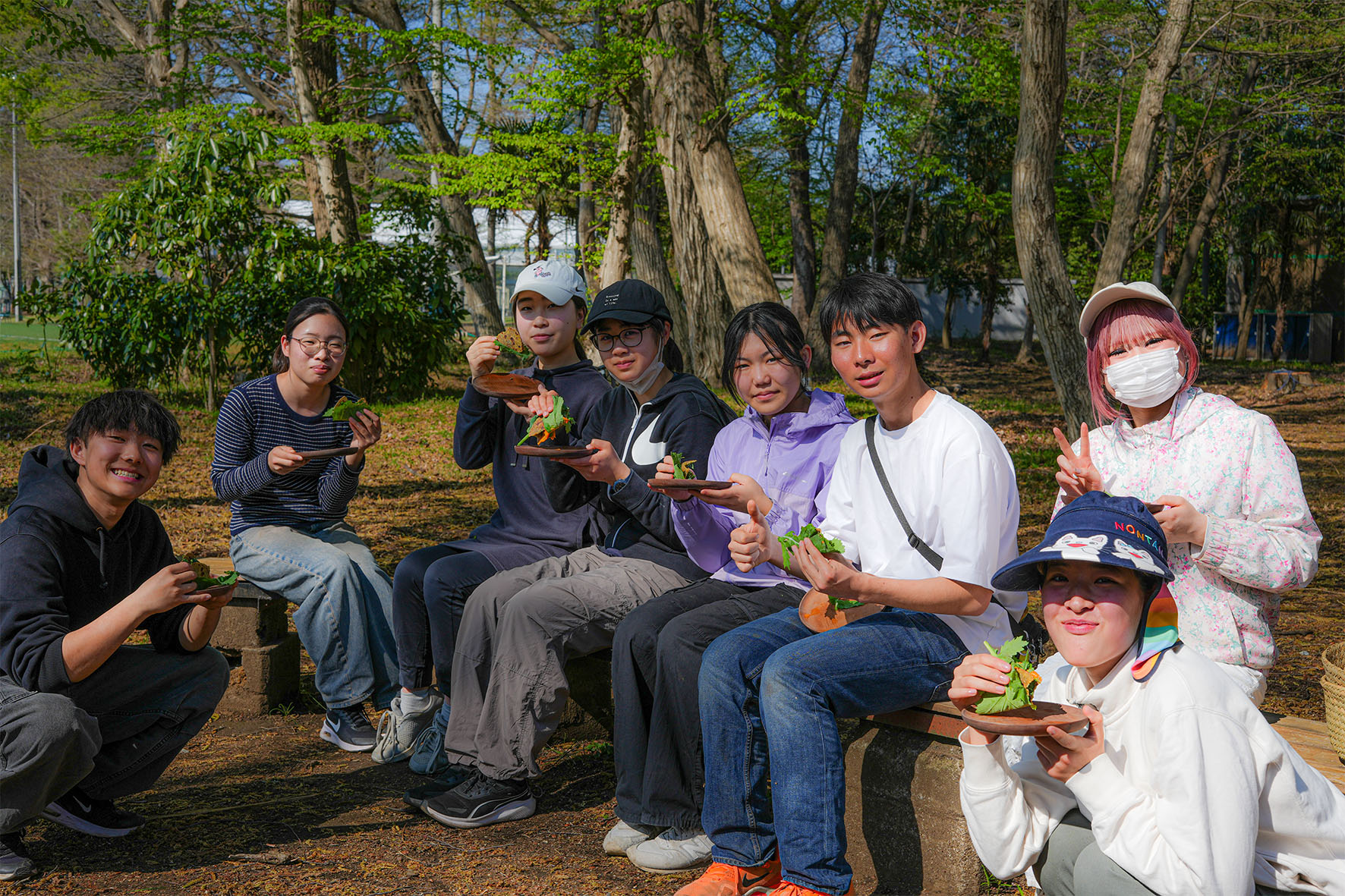
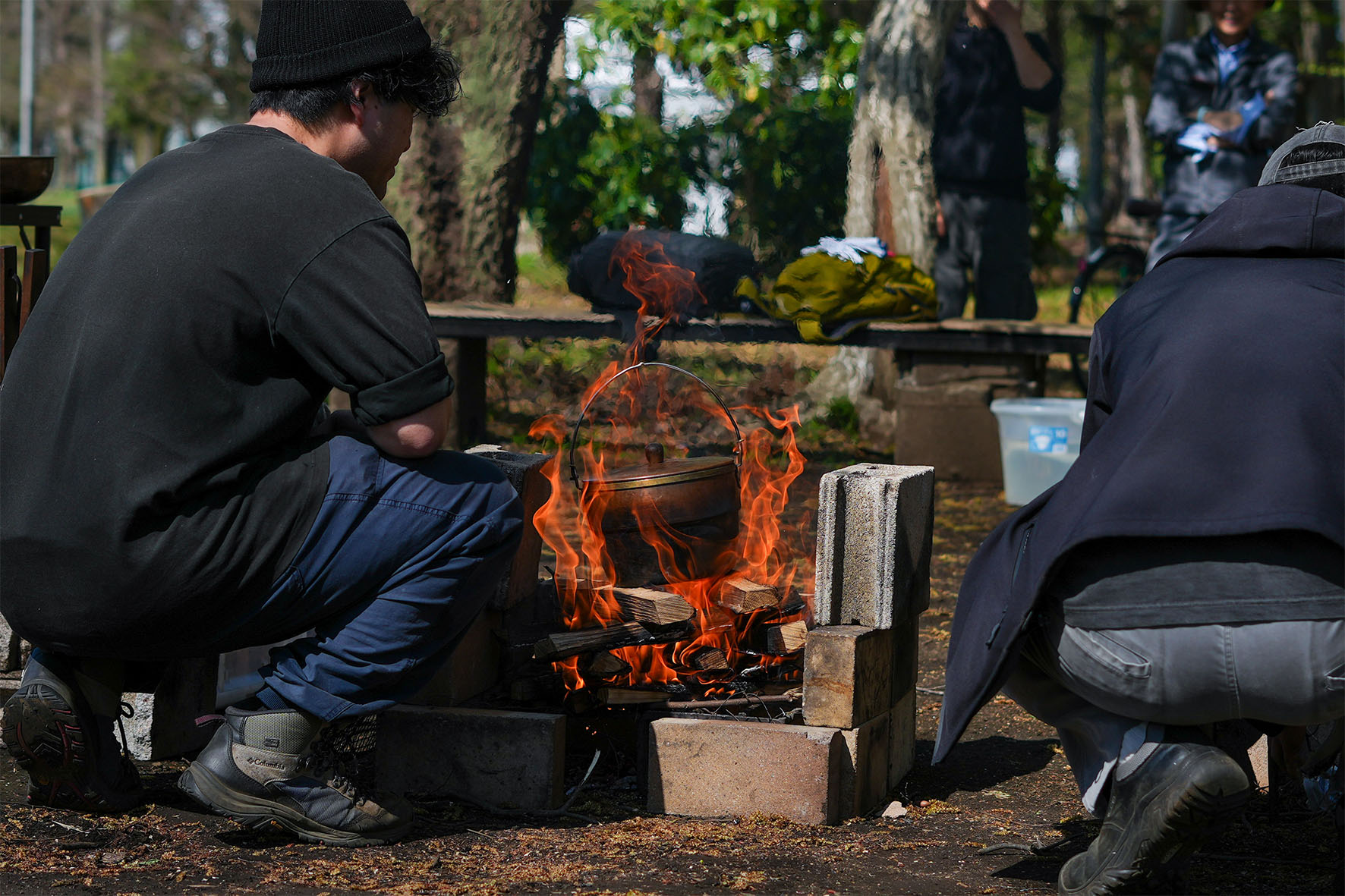
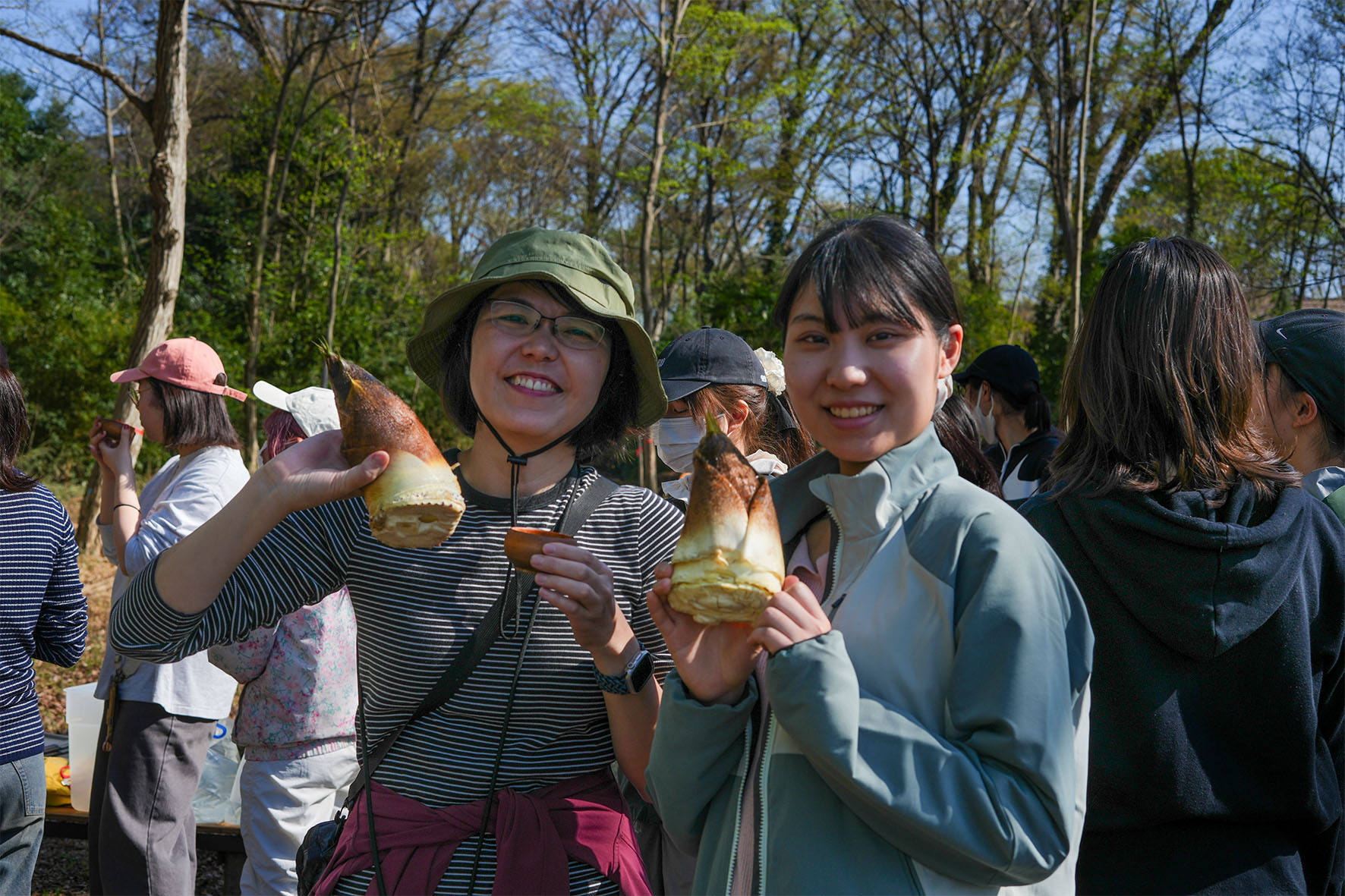
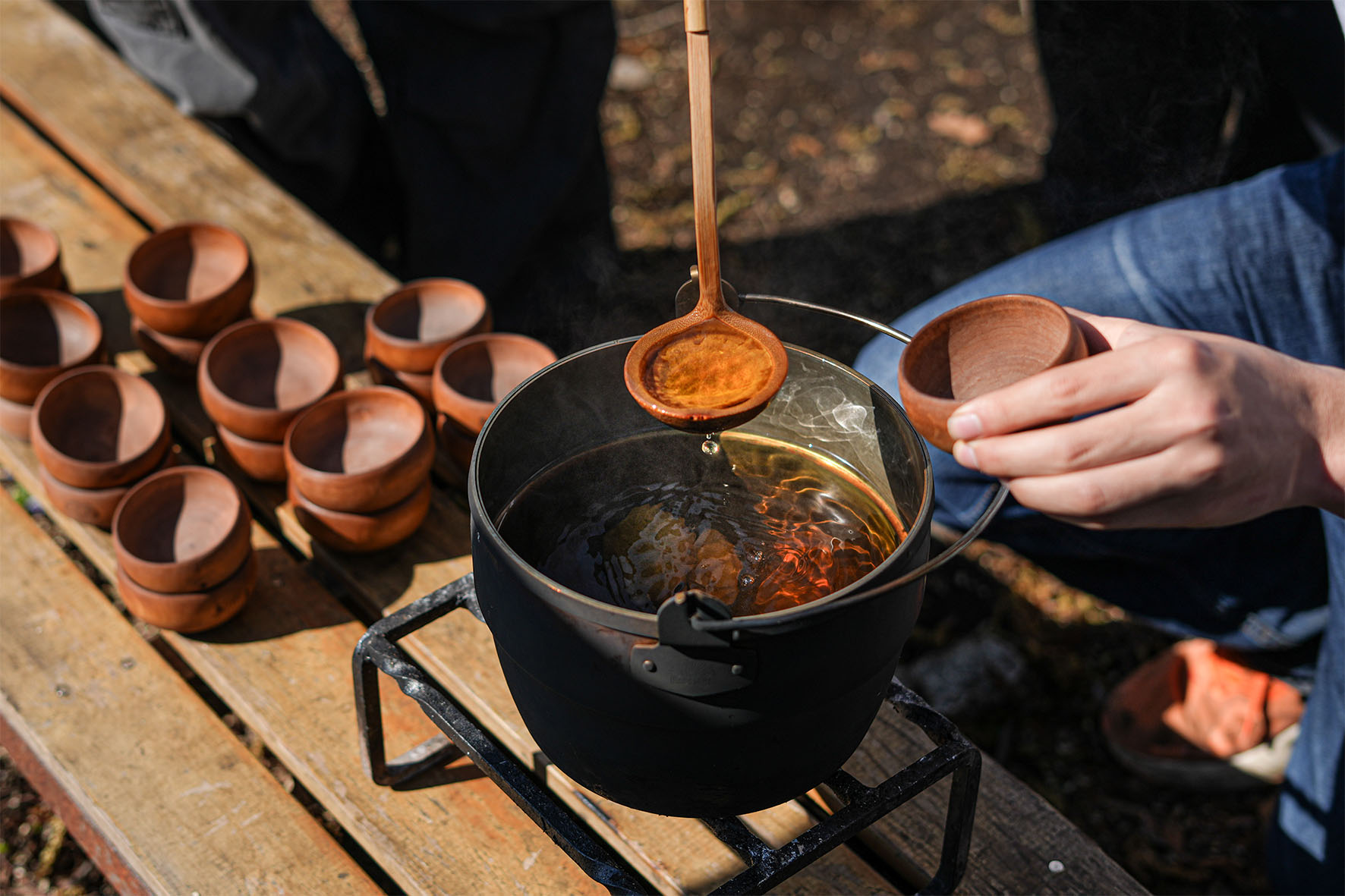
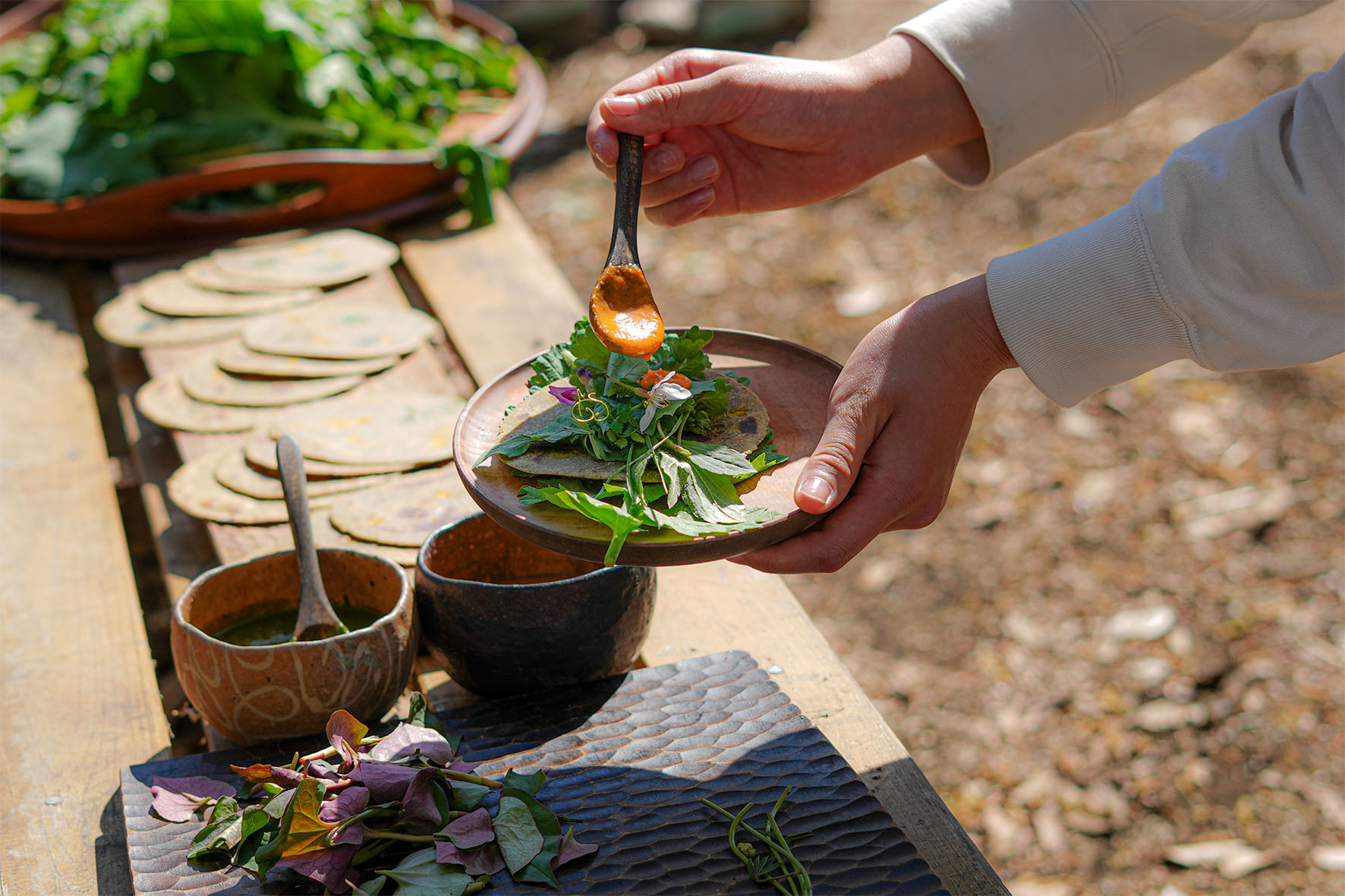
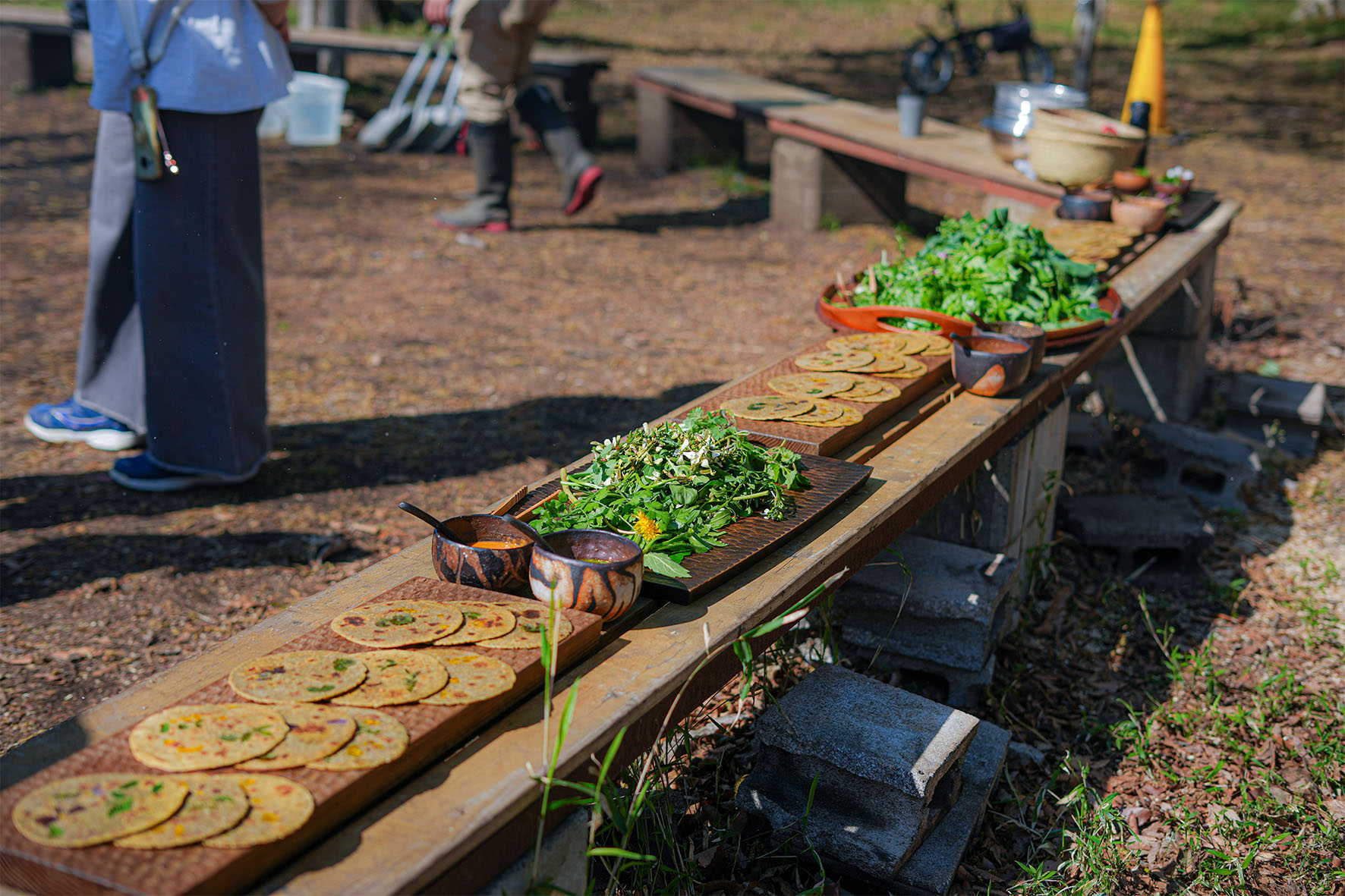
At the campsite, we enjoyed beautiful tacos prepared by the Maruta team—made with locally sourced wheat with flowers and herbs woven in—topped with freshly harvested spring vegetables and wild greens. We also enjoyed tea made from kumazasa (Sasa veitchii) harvested on campus, as well as fresh ICU bamboo shoots that had been dug up earlier that morning by high school students and the SDGs Promotion Office members. While fully appreciating the nature’s gift of the campus, we shared a delightful time interacting with the Maruta team, university students from the SDGs Promotion Office, high school students, and faculty and staff. *Collection of plants for this event is conducted with special permission. Unauthorized collection and foraging on campus are strictly prohibited.
All photographs on this page were taken by Kyoka Horiuchi.


